Showing posts sorted by date for query owen marshall. Sort by relevance Show all posts

Thursday, April 30, 2026

For the Archive: Q&A with myself from 2024

Whenever I update my website, specifically the ABOUT ME page, I put the content I am replacing here for... posterity, I guess. What conversation did I have with myself in 2019? Oh, here it is.

Anyway, here's what I've had on my website for the last two years (written shortly after I had a three week residency at the Michael King Writers Centre and will still riding the high of a productivity burst) and will replace shortly...

Bonus Q&A with myself (from 2024)

What are you working on at the moment?

I'm finishing two manuscripts. One is a new novel (contemporary, with elements of crime fiction) and the other is a short story collection (stories written over the last 15 years). I'm also writing more book reviews and essays than I have in a good while.

Do you write full-time?

No. I work full-time in the climate action/sustainability space, which means I currently write around work and family commitments. 

In this context, writing residencies, even short ones like the three weeks I spent at the Michael King Writers Centre in 2024, are invaluable. They let me focus in a way that is not possible to when writing is measured in hours rather than days. But having a life is a critical part of my creative process, too. Three weeks of solid writing would be fruitless if I wasn't full to the brim with ideas (and frustrations) that have accreted over months and years.

Is it your dream to be a full-time writer?

I've made the choice to live in New Zealand, have a family and a mortgage and be a writer. I can have it all, just not all at once or all the time.

But not having to work for money for an extended period... that does sound nice.

What do you prefer: short stories or novels?

As a reader, I'm consuming more novels at the moment. 

As a writer, perfection is unattainable regardless of the form. Even so, I enjoy grasping for perfection in short stories. Arranging a few thousand words, a limited cast of characters and a handful of settings in just the right way seems like something a human brain could achieve. 

But writing a novel? That requires an even greater sense of self-delusion. Perhaps it's no coincidence my protagonists gravitate towards madness in these longer works.

Your first two novels both had elements of historical fiction. Is that a genre that has always appealed to you?

Actually, no. I fell into historical fiction with The Mannequin Makers. After finishing the stories in A Man Melting, I started working on a novel that took a character from one of these stories and spent more time with him. I plugged away at this project for quite a while, but always seemed to get bogged down. The novel was set in the present and focused on a dude about my age at the time, with experiences not dissimilar to mine.

When I finally gave up on this novel, I decided that the next thing I worked on would either be set in the past or the future. The future seemed too easy - I could just make things up - and I thought doing research would help me feel like a proper writer. I was also piqued by the kind of historical fiction that was being published in New Zealand at the time, which played up the sense of Aotearoa as a predominantly rural backwater, disconnected from the rest of the world. But that's not how most Pākehā saw themselves before the advent of World War One. It was an age of newspapers and burgeoning towns and department stores. It didn't matter it took the latest fashions from Paris six months to get here by boat, because our seasons are six months out. 

So I chose to focus on two ideas that I'd been kicking around for a while that needed to take place in the past, but reflected this more cosmopolitan, connected vision of Aotearoa and devoted the next two or three years to them.

It was rewarding, but also really hard. 

My next novel, NAILING DOWN THE SAINTwasn't meant to be so hard. It's mostly contemporary, but does draw a lot on the life of San Guiseppe da Copertino (1603-1663). It was really interesting to write about a sleazy Hollywood director before, during and after the first eruption of #MeToo in 2017. I guess that's one reason some writers prefer to stick to the past: the illusion of immutability. 

That, and no cellphones. 

I can see how cellphones make a lot of mystery plots improbable or impossible now, but they also open up new ways of communication and connection for characters. Some of my favourite books in recent years have been extremely online, like Patricia Lockwood's No One is Talking About This, or phone-y (the opposite of phony, perhaps) like Big Swiss by Jean Beagin or Wellness by Nathan Hill.

You attended the International Institute of Modern Letters MA programme back in 2006. Is that when you wrote the stories in A Man Melting?

No. I actually tried to write a novel that year — a great experience but I think it was a mistake to try and write a novel from go to whoa in eight months. Too many decisions were made for the sake of expedience that then became so integral to the fabric of the novel that it was beyond fixing (though I spent another year trying!). The manuscript now sits in my bottom drawer along with the novel I tried to write when I was twenty-one.

When did you turn your attention to short fiction?

I've always written short fiction. It's a natural progression to start with the shorter form and work your way up to the longer, if that's your goal. I mostly read novels when I was younger (Douglas Coupland, Kurt Vonnegut, Chuck Palahniuk), so that's what I grew up wanting to write. Tastes change, of course, and eventually I found an appreciation for subtlety (though I still love me some Vonnegut). After finishing my MA, I really wanted to keep writing, but didn't have the reserves of energy needed to start another novel. So I returned to short fiction.

The first two stories I wrote after doing my MA were 'Copies' (which has since been included in three anthologies) and 'Another Language' (which won the novice section of the 2007 BNZ Katherine Mansfield Awards). Something just clicked.

In 2008, while living in Edinburgh, I tried to write one million words in 366 days (it was a leap year). I only wrote 800,737 words, but it was a very successful failure. Almost every story in A Man Melting was written or revised during that year. There's also at least one story from this year that I hope to include in my second collection, whenever that may be published.

Fatherhood is a recurring topic in your work. Whether it's Colton Kemp being a very bad parent in The Mannequin Makers, or Duncan Blake trying to juggle Hollywood aspirations and a neuro-divergent son in Nailing Down the Saint. To what extent is this a reflection of your own experience as a son and father? 

My father died when I was sixteen, which may be why the parent-child dynamic is endlessly fascinating to me. That mix of nature and nurture imprinting upon the child, but also the randomness of how these factors are expressed. The futility of trying to shape a child too completely. The slow realisation that parents are flawed and often fickle, and much later (too late?) their noble and tender aspects.

I finished writing The Mannequin Makers before I became a father, though my daughter did attend the book launch as a six-month-old. Looking back, I was imaginatively projecting myself forward into a state of fatherhood. Before that, my stories had been more interested in the child's perspective ('Copies', 'The Skeptic's Kid').

These days, while parent-child relationships might not feature in the high-concept pitch-line for the things I'm writing, these dynamics will be there, idling beneath the hood and occasionally driving the action. 

Please name ten authors who people should be reading.

I don't like to single out writers with no context. People should read widely. Read for enjoyment and to be challenged, though doing so separately is fine. Read local. Read foreign. Read contemporary. Read beyond the now. Read Meg Mason, Kirsten McDougall, Sayaka Murata, Cesar Aira, Jack Butler, Barry Hannah, Thomas McGuane, Steven Millhauser, Ali Smith, Rachel Cusk, Jenny Offill, Tyson Yunkaporta, Robin Wall Kimmerer, Eleanor Catton, Curtis Sittenfeld, Kim Stanley Robinson, Neal Stephenson, Andy Weir, Alexandre Dumas, Charles Dickens, Emily Henry, Beth O'Leary, Jim Shephard, Owen Marshall... How many is that?

Twenty-four.

Patricia Grace, Janet Frame, Iris Murdoch...

Okay, thank you.

David Vann, Sue Orr, Elmore Leonard....


Links
The Quest for a Million Words - the record of a year spent writing like stink.
This Fluid Thrill - My blog, where you can catch my thoughts about writing, reading and whatever else passes my field of vision.
Craig Cliff on The Academy of New Zealand Literature's website


Tuesday, December 24, 2024

December 2024 consumption diary

MUSIC


SCHEDULING NOTE

I've got my best books and music lists in draft and will post my annual awards here before the end of the year if I find time.

BOOKS

Praiseworthy by Alexis Wright (novel, audiobook, Australia, 2023)

This novel starts in a kind of ecstatic, fabular mode that another novel might use as a couple-page prelude before slowing down and becoming a "proper novel", but Praiseworthy is what it is from page one to page 736 (or hour 36 and minute 50). To which I say, bravo. Love the chutzpah. I'm no expert in the narrative modes of the Waanyi people, but this storytelling feels both ancient and infected by our doomscrolling, caricatured present. 

(Is it always thrilling? No. Neither is Gulliver's Travels. Satire sags when pursued at length. Both are still classics).

Martyr! by Kaveh Akbar (novel, audiobook, US, 2024)

This could be the start of a bad joke: Acclaimed poet writes a literary novel about death, religion, sexuality, loss, nationhood and lies... Except it fucking rules.

The narrative hinges on a pretty incredible (as in: hard to believe, though not hard to predict) twist, and yet somehow it doesn't scuttle the whole enterprise.

The most fun you can have while being miserable. Highly recommended.

Return to Harikoa Bay by Owen Marshall (short stories, physical book, NZ, 2022)
Sleepwalking in Antarctica by Owen Marshall (poetry, physical book, NZ, 2010)

Return to Harikoa Bay was Marshall's first story collection in over a decade. It sat on my bedside table for two years before I finished it. And it was a sloooooooooog.

I bloody love Marshall's stories. 13 years ago I dedicated a whole month on this blog - back when I posted often and at length (pre-kids!!) - to Owen Marshall to celebrate the release of Living as a Moon (his previous collection)... 

So I bought Harikoa Bay as soon as it came out, but it suffers from what put me off the two Best Of collections of Marshall's work: too much of the same kind of story. I almost wrote: too much of a good thing, but after a while, the goodness was no longer apparent. Too many stories start with big-ass pronouncements and end with neat topic sentences. 

And there are a lot of stories. Like 33. No collection (even a best of, probably) should have that many stories. 

There's a bit more variety in the final third, but by that point, the die was cast.

I went and read Marshall's poetry collection afterwards out of curiosity. I'd describe most as moment poems, a single experience (in some cases: image) covered in less than a page. Mostly crisp, astute, but rarely surprising.

But the endings were better than the later stories...

Like in 'Tuoro', a poem about a visit to the Italian cemetery of the same name, which ends:

And we sit here, at the end of a corridor
Of time, and drink dark espresso in the sun.

The 'corridor of time' is a bit much, but saved (slightly) by the enjambment. I wonder if I cut the last sentence or two off every story in Harikoa Bay, and then took the best fifteen, maybe it would have hit different?

Anyway, it took be so long to read Harikoa Bay that Marshall's come out with another collection, the imaginatively titled: New Stories

Check back here in two to thirteen years for my thoughts.

The Final Diagnosis by Cynric Temple-Camp (non-fiction, audiobook, NZ, 2024)

Advertised as the third and final book in Temple-Camp's series of true tales from a provincial pathologist. You'll have to read to find out why there'll be no more...

The greatest trilogy set in Palmerston North since... ever.

Good Material by Dolly Alderton (novel, audiobook, UK, 2024)

I read this at the same time as I watched Baby Reindeer. Both stories feature flailing stand-up comics with disastrous Edinburgh fringe experiences. While Baby Reindeer goes dark, Good Material trims a course close to the Romance Novel coastline, without needing THAT kind of happy ending. But what if I wanted that kind of happy ending in my sappy dotage?

The Wager by David Grann (non-fiction, audiobook, US, 2023)

If someone asks what Creative Non-fiction is, I'll point them to this book, somewhat ungenerously. Maybe I like my history bone dry and my love stories soft and gooey?

On Bullshit by Harry G Frankfurt (non-fiction, audiobook, US, 2005) - Was this meta, or just shit?

Stray Thoughts & Nose Bleeds by Duncan Sarkies (short stories, physical book, NZ, 1999) - Came out the same year as Scarfies... not a bad quinella. The title makes it sound like a collection of newspaper columns, but it's a depraved inversion of the Joe Bennett afterworld.

The Deleted World by Tomas Transtromer (poetry, physical book, Sweden, 2006)
Dedications by JC Sturm (poetry, physical book, NZ, 1996)
Poūkangahatus by Tayi Tibble (poetry, physical book, NZ, 2018)

How to watch basketball like a genius by Nick Greene (non-fiction, audiobook, US, 2021)
Different Dude: are you ready for a better life? By Rod Benson (non-fiction, audiobook, US, 2023)

I actually listened to these two books mid-year, when Spotify started offering audiobooks and, by virtue of my listening to a lot of basketball podcasts on Spotify, these two books were high on my recommendation list.

FILM & TV

Day of the Jackal (2024 TV series)
Baby Reindeer - Season 1
That's Not Entirely Accurate (Pretty Good, Secret Base)
The History of Slipping on Banana Peels (Pretty Good, Secret Base)
Interstellar*

Wednesday, September 4, 2024

Consumption Diary: August 2024

MUSIC

BOOKS

I re-read Living in the Maniototo a few more times (and dipped back into Rachel Cusk's Outline trilogy and Parade) in August as I prepared my talk for the symposium on Reading Janet Frame (for) Today on the 30th. It was a great event!

I also read:

The Material World by Ed Conway (non-fiction, audiobook, 2023, UK) - this really did make me look at the (material) world differently. I highly recommend it.

The Anxious Generation by Jonathan Haidt (non-fiction, audiobook, 2024, US) - this was basically a recapitulation of Haidt's previous work on anti-fragility, repackaged as an anti-phone treatise. He admits as much toward the end of the book.

Children of Paradise by Camilla Grudova (novel, audiobook, 2022, Canada) - okay.

Until August by Gabriel Garcia Marquez (novel, audiobook, 2024, Colombia, translated) - I can see why GGM wasn't keen on this being published, but also why his literary executors thought better of his wishes and pubbed it anyway.

James by Percival Everett (novel, audiobook, 2024, US) - I retelling of Huck Finn from Jim's perspective. In the spirit of Colson Whitehead's The Underground Railroad, Everett employs alternative history (Jim and the other slaves are highly educated and eloquent, but speak in their dumbed-down patois to white people for a range of reasons) in such a way that you realise the "history" was also partly fiction. Unfortunately, the book is limited by the picaresque nature of the original narrative so that, like any remake, it never quite becomes its own thing, and like any road-trip (or river-trip) novel, it never quite feels complete, but merely finished.

Chosen by Geoff Cochrane (poetry, physical book, 2020, NZ) - this came out as I was preparing to move islands and I didn't get around to reading it before Geoff died, or his posthumous best of came out. Now that I've read this last collection, it's time to delve into the best of (I suspect it will suffer the same problem that Owen Marshall's 2x best of story collections have, in that the quirky, interstitial pieces might not carry the individual heft to make it into a best of, but leaving them all out means the sum of the parts is less than the whole impression of breadth and deliberate unevenness -- or maybe willingness to subvert reader expectations is a kinder way to put it -- in any one collection)… We shall see!!!

Fire and Blood by George R.R. Martin (fiction, audiobook, 2018, US) - I quite liked Season 2 of House of the Dragon, but became increasingly intrigued by what book readers were saying about how much action was left to come in the show's final two seasons, so I became a book reader myself and... this was not my cup of tea. I read the first two novels in A Song of Fire and Ice and quite liked them, but feel no compunction to read the rest. But Fire and Blood is not a novel, but a collection of fictional histories Martin knocked out for certain anthologies. The sections that inform House of the Dragon are the most engaging, but they are still pretty tedious. I guess I'm no Westeros completist.

Skinny Dip by Carl Hiaasen (novel, audiobook, 2004, US) - Several times I felt like I'd read this book before, but I can't find any hard evidence. This speaks badly for Hiaasen and/or me. 


FILM & TV

The Olympics (how good were they?)

Colin from Accounts - Season 2

Taskmaster NZ Season 5

Anyone But You

The Sixth Sense

Masterminds

Hate to Love: Nickelback

Remembering Gene Wilder

The Last of the Mohicans

How to Rob a Bank

Untold: The Murder of Air McNair


Monday, April 24, 2017

Nth Degree: Fortnight #6 of the Burns

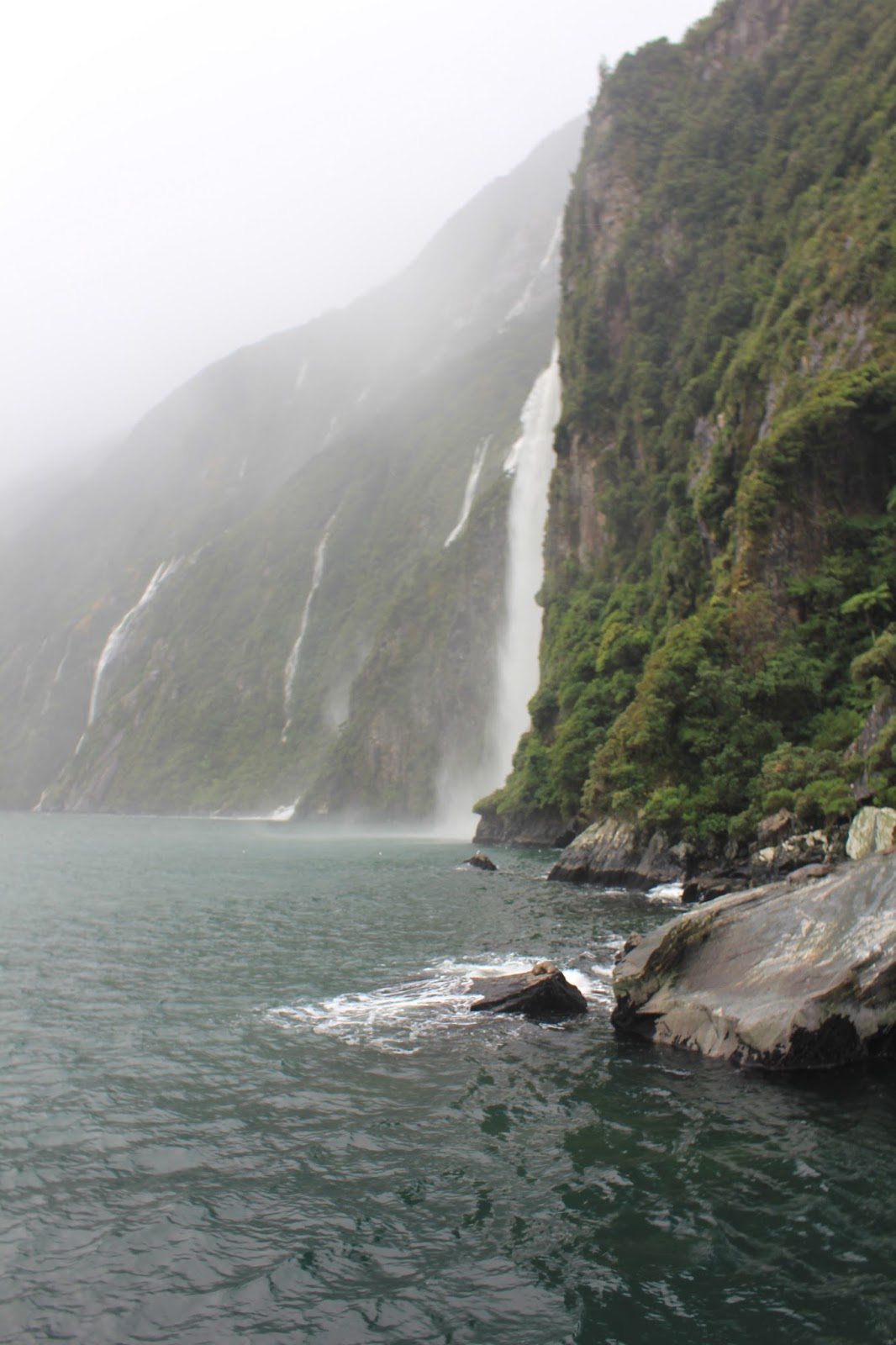
Milford Sound with rainbow
Wordcountz

I was going to do some graphs and trends-after-12-weeks stuff this time around, but I've got a bunch of other things to cover and post. So I'll leave the maths for another fortnight when I find myself less interesting.

As for fortnight #6, here it is, by the numbers:
  • Total words for the fortnight: 7,395 words (cf 12k last fortnight)
  • 1st week: 3,955 / 2nd week: 3,440
  • 89.6% of these words were on the novel

Going to Fiordland for Easter took a chunk of time of out the end of week 1 and the start of week 2. 

The plateau that I mentioned last fortnight persisted longer than I'd hoped (not so much in terms of total words, but how far into the story I managed to proceed). I resorted to alternative means of generating content (see cut-up chapter below), and managed to get something or somewhere.

With recent opportunities (see below), I'm still trying to figure out how much I try and get my location scout moving through time, or if I need to pull back and get things planned out better...


Travels (with Tomtit)

Misty ol' day in the Sound


Waterfall with seals, Milford Sound
Tomtit

Lake Mistletoe
Lake Manapouri

Mug

So I’m still using the dinky little Arcoroc cup I found in the dinky little kitchenette and having to make too many trips to make tea during my day and maybe I will end up ordering something in another moment of weakness.
And so it came to pass.


It depicts scenes from Monty Python's Holy Grail in a Saturday morning cartoon mode, which is kinda sorta exactly what my novel will turn out like if I'm not careful.


Outings


Octagon Poetry Collective

Last week I went to a reading at Dog With Two Tails. The feature poets were Sue Wootton (above) and Victor Billot. There was also an open mic for the collective members - it was an incredibly well oiled machine, each poet getting briskly to the mic, reading a single poem (some with patter, some without, but never more than necessary) and blending back into the crowd.

After an intermission, the chair came to me and lightly twisted my arm, so I read a poem ('Transition', with a rambling preamble that did not do justice to the preceding efficiency). While I've published quite a few poems, sporadically, I think the last time I read one of my poems in public was in 2006 at the Museum of City and Sea in Wellington.

It was a fun night and Sue and Victor were great too.

Town Belt Traverse

After going 11 years between public poetry readings, the next gap was five days. And instead of reading one poem, I had two and a half hours to fill!

The event was the annual Town Belt Traverse, organised by the Dunedin Amenities Society. As the Burns Fellow, I was positioned at the 5th and final station in Prospect Park and asked to "recite some verse" (people who talk about reciting and/or verse tend to think of poetry as they might dinosaurs or unicycling).

These first arrivals were the hardout walkers who hadn't really mucked around at any of the other stops and weren't going to lower their heartrate for a spot of poetry. Fair enough.

After about half an hour the stream of people became a bit more steady and in less of a rush, and I found my groove. People we much more comfortable stopping to listen if I was already reading, so it helped to have some longer pieces. (I learnt quickly that starting a poem as someone past made them feel as if they'd triggered a security light). In addition to about 20 poems of my own, I read some others' (Emma Neale, Geoff COchrane, Alice Oswald), and two short stories that are bitsy and poetic ('30 Ways of Looking at Marumaru South' and 'Parents in Decline').

I was joined in the middle span by one of the PhD candidates from the English Department who read Owen Marshall's 'The Divided World' (great choice) and two of my own poems (a weird experience). Thanks Damien!

Despite some awkward moments, I really enjoyed it at times, and had some good chats with people in between pieces.


The long and blinding road

A selection of 40 or so fake quotes from my fake famous director
 in the process of being ordered and rationalised before
being incorporated into the novel
TBH there are times when working on a story or a novel when it can get scary. 

Scary because suddenly what you are working on becomes clear and there’s a bigger meaning to it, or a bigger question underlying the work, that you didn't quite know was there when you started and are confronted with the task of being the one to see this through. 

Am I really fit to be asking this question? 

Can I really write a novel that dramatizes this particularly big thing that I didn’t know I was even grappling with until ninety seconds ago?

In time the feeling fades. You mock yourself for your self-importance. That's the only way you can proceed, or at least that I can.

One does not sit down each day and produce work of genius. One might come upon it, in the course of one's work, and if one is careful not to look directly into its eyes, might encircle it, once, twice, thrice, each revolution claiming a little more of its power for your own...

Or not. Probably not.


Internet Explorer

I mentioned last fortnight that I was spending a lot of time looking at places in Italy on Google Street View. At the risk of turning this place into selfie-central, I bought this t-shirt to embrace the desk-bound nature of my research/creativity.


HOWEVER...

Things move quickly in these here parts. 

Next month, I'm off to Italy and, after fulfilling some non-novelistic duties, I'll have the chance to 'scout' locations in person.

This is good news. Great news, even. Except, it does mean a lot of this next month is gonna be spent playing my own travel agent, trying to squeeze as much into my time on the ground, and preparing for the primary reason for my visit (education business). 

A welcome spanner in the works. 

Perhaps I need a new t-shirt?

Is it wrong that I really, really like Gore?
-->

Saturday, May 18, 2013

Archival Activity


One for the archives

I'm in the process of updating www.craigcliff.com, which means sloughing away a lot of the A Man Melting-centric material and adding more current stuff about The Mannequin Makers and my general awesomeness (it won't take long).

In the interests of nothing much, except my own curiosity in twenty years time (what did my website actually say in 2010-13?) I'm plugging the soon-to-be-excised text here.


About Craig

Standard author's bio you'll find all over the place

Craig Cliff was born in Palmerston North in 1983. Since then he has accumulated three university degrees, experienced office life in Australia and Scotland, swum in piranha-infested waters, slept at 4,200 metres above sea level, tried to write a million words in one year and learnt there's not much to do in Liechtenstein. His short stories have been published in New Zealand and Australia; one of them made it into Essential New Zealand Short Stories edited by Owen Marshall. These days he lives on Wellington's south coast and works for the government.

Bonus Q&A — exclusive to craigcliff.com

You attended the International Institute of Modern Letters MA programme back in 2006. Did you write the stories in A Man Melting during your MA year?

No. I actually tried to write a novel that year — a great experience but I think it was a mistake to try and write a novel from go to whoa in eight months. Too many decisions were made for the sake of expedience that then became so integral to the fabric of the novel that it was beyond fixing. The manuscript now sits in my bottom drawer along with the novel I tried to write when I was twenty-one.

So when did you turn your attention to short fiction?
I've always written short fiction. It's a natural progression to start with the shorter form and work your way up to the longer, if that's your goal. I mostly read novels when I was younger (Douglas Coupland, Kurt Vonnegut, Chuck Palahniuk), so that's what I grew up wanting to write. Tastes change, of course, and eventually I found an appreciation for subtlety (though I still love me some Vonnegut). After finishing my MA, I really wanted to keep writing, but didn't have the reserves of energy needed to start another novel. So I returned to short fiction. The two stories I wrote were 'Copies' (already anthologised twice before appearing in A Man Melting) and 'Another Language' (won the novice section of the 2007 BNZ Katherine Mansfield Awards). After that, things began to fall into place. In 2008, while living in Edinburgh, I tried to write one million words in 366 days (it was a leap year). I only wrote 800,737 words, but it was a very successful failure. Almost every story in A Man Melting was written or revised during that year.

But to write 800,000 words, you must have written more than short stories?

Oh, sure. There were long rambling blog posts about the Tragically Hip, audiobooks, life in Edinburgh and the places I was travelling that year. There were also a couple of aborted novels and screeds of poetry.

Travel is a common thread in a lot of the stories in A Man Melting. Are these travel stories based on your own experience?

Some more than others. I've never been to Equador or Cambodia, two places characters find themselves in A Man Melting. I used my experience in similar countries like Peru and Thailand, and read a lot of travel blogs and guidebooks to try and get the key details while keeping a tourist-eye view. Fiction, and short fiction in particular, works best when things are called into question. An easy way to do that is to take a character and pop them in an unfamiliar country. I guess I'm less interested in where people travel than what they might find out about themselves when they get there.

What are you working on at the moment?

I’m working on a novel set in the past. I hesitate to call it a historical novel as that phrase isn’t quite right: ‘history’ shouldn’t come before ‘novel’. It’s fiction with a research element. Fantasy tethered by the occasional fact. No corsets are removed. No street urchins or rich benefactors. There is a lighthouse, though. If everything goes to plan it should come out in this part of the world in 2013.


A Man Melting
The blurb

A son worries he is becoming too perfect a copy of his father. The co-owner of a weight-loss camp for teens finds himself running the black market in chocolate bars. A man starts melting and nothing can stop it, not even poetry.

This terrific collection of stories by an exciting new talent moves from the serious and realistic to the humorous and outlandish, each story copying an element from the previous piece in a kind of evolutionary chain. Amid pigeons with a taste for cigarette ash, a rash of moa sightings, and the identity crisis of an imaginary friend, the characters in these eighteen entertaining stories look for ways to reconnect with people and the world around them, even if that means befriending a robber wielding an iguana.

Why you really oughta buy the book 

Variety. Is it the spice of life, or is that cardamom? Either way, you've gotta love a book that covers house hunting and celestial mechanics, cheerleader porn and travel blogs, tug of war and car crashes, pregnancy tests, dwarves, hermits, cooking shows, dodgy teachers, the poetry of Sappho and the artistic potential of photocopiers.

Like animals? You'll find a veritable menagerie: cockroaches, fleas, lions, trout (rainbow), kittens (dead), apes (Planet of the), meerkats, whales, kereru, dodo, Yangtzee sturgeon, the indefatigable Galapagos mouse and many more.

Music aficionado? Well, there's references to Blur, The Beatles, Debussy and Dire Straits, but there's also Nelly Furtado, Neil Sedaka, Van Morrison, U2, Styx, and... urr... Julie Andrews in The Sound of Music.

Want a dose of kiwiana? What about Cameo Cremes, Raro, Ford Escorts, PVA glue, New World Supermarkets, Rashuns, Ka Mate, Minties, cricket at the Basin, MAF consultants, Nick Harrison and those breast cancer t-shirts you get from Glassons?

Other reasons to buy A Man Melting

1) You're related to Craig by blood or marriage
2) You are Craig's mechanic, accountant, dentist, supervisor-one-removed, former teacher, or best friend from kindergarten
3) You collect books by authors with two first names
4) You have read the other 56 works longlisted for the 2010 Frank O'Connor Prize
5) You have read the other 99 books in The Listener's Top 100 Books of 2010
6) You love lists.

Monday, June 18, 2012

All that lofty stuff: a chat with Lawrence Patchett

I Got His Blood on Me: Frontier StoriesLawrence Patchett’s debut short story collection, I Got His Blood on Me, was launched earlier this month. I first came across Lawrence’s writing when he won the ‘over 10,000 words’ category of The Long and the Short of It competition in 2011. His winning story, ‘The Road to Tokomairiro’, is in this collection, along with eleven other stories that feature ghosts, shipwrecks, big game fishing and kicking a ball around at the park. Laurence Fearnley sums it up pretty well on the back cover when she calls it, “a rugged and haunting collection”.

Over the past few days I’ve been firing questions to Lawrence via email and he has graciously responded.

The following conversation is the sixth in my occasional series of chats with newish Kiwi short story writers (see also: Tina MakeretiPip AdamSue OrrAnna Taylor and Breton Dukes).

----

CC: A lot of your stories begin – on the page at least – with plot. In the title story, which opens the collection, the narrator finds an injured man on the side of the road with a musket and other items that suggest he might be from another time. In the following story, ‘The Pathway’, we learn in the first paragraph that a missionary has drowned while trying to cross a river on horseback. When you start a new story, do you start with these events in mind, or is the starting point somewhere else?

LP: I like your distinction between the story on the page, and the real beginning of the project, way back at draft zero. There’s a big distance between those two points! At the real beginning, when I’m first working on a story, it always starts with character, someone who’s been suggested to me by a real person in a historical book or photograph or whatever, or someone completely invented. Often it’s a mixture of the two. That character lives with me for a bit before I can find an incident—a bloody crisis, most likely!—that will push them into some pretty extreme stress.

When it comes to putting the story on the page, I like to get straight into it, without any throat-clearing. I want to grip the reader right from the start, so often I go straight to that crisis or central conflict—not all the time, but often it seems to work out that way.

I admire other writers who can do it all sorts of different ways, like opening with that more subtle and symphonic sort of sound, but still hooking the reader in. You know what I mean? Maybe that’s what Alice Munro does. Or like some of those Owen Marshall stories in The Divided World, or the start of a Richard Ford novel, maybe. I’d love to be able to do that at the start of a story, without losing the reader. Maybe with a bit more practice, eh?

CC: Tell me about it. The path to a finished story is littered with the scrunched balls of failed symphonic openings.

That’s not to say your openings are plain. There are some great, loaded first sentences: “The man bled on the motorway.” “We carried no guns.” “Hazel ran into the bunkhouse with her gun drawn.” Were you conscious of the need to hook your readers in because of the longer-than-normal length of many of these stories? What are some of the differences between a 3,000 word story and a 10,000 word one?

LP: Thanks—yeah, I was definitely aware of that. You have to hook them immediately into a big story, something that will be a good reward for the bigger chunk of reading time and attention. Around this time I remember reading some bedtime stories to my nephew, and I noticed how the best stories took you right into the story’s central problem in the first sentence—and actively, as well. No messing.

One of the big differences with a longer story is that you can push your character so much further—and, in fact, you’re obligated to. There’s no hiding. This means that in a longer story you can’t opt for that reticence you can sometimes get away with in shorter stories—you know, where the character begins to see the massive problem in their lives or themselves, and just backs away from it. That’s what my stories used to do, anyway. In a long story you’ve got to force them to confront it and articulate it and own it, and all that difficult stuff.

The LarnachsCC: It seems as if the New Zealand novel has become obsessed with the past in recent years. As The Earth Turns Silver, The Larnachs, Wulf, Rangatira, The Open World, The Parihaka Woman — they’ve all had their own successes. In terms of historical short stories, however, it’s been slimmer pickings. Apart from a cluster of stories in Fiona Kidman’s The Trouble With Fire, I can’t think of any other recent collections that tackle New Zealand history. What are some of the joys and frustrations of writing historical short stories?

The Trouble With FireLP: I think I can answer this question by saying that I don’t really think of them as historical short stories, because that’s a direct route to a whole lot of frustrations! I try to think of them more as stories that interact with the past, or ask questions about it, or something. Otherwise I get all tangled up in the historical stuff—what are my rights here, what would this real person think about their portrayal, etc. I try to break those reader expectations about the ‘historical’ element right away. That’s why there are all those ghosts and out-of-time experiences and holograms and stuff—they’re partly about disrupting that idea of a transparent window on to the past. Sorry to get all stuffy about a categorisation thing, but I think it’s a way of answering the question, because if you set out to write a historical short story I reckon you’re going to run into trouble, whereas if you just try to write a story to explore something that interests you, it will go better. That’s the way it works for me anyway!

Apart from that, I think the joys and frustrations are the same—i.e., it’s bloody hard until you get to about Draft No. 9, and then it gets clearer and easier! Short stories are so cool because you can do all sorts of structures and voices, from a one-page vignette type thing up to a really long adventure yarn, so it can accommodate the rich, big world you sometimes need for historical settings, or a really spare and minimal number. But I do love that idea of pushing a huge story or problem through a small narrative frame, and somehow stories drawn from history lend themselves to that well.

That was one of the joys of it, for me, trying out those different structures and techniques and noises. I remember you saying one time that you like it when short story writers go for diversity and variety, and I’m starting to see what you mean now. I hope I’m not misquoting you there. Certainly that’s one of the things I was struck by in A Man Melting—that versatility and variety.

CC: That certainly sounds like something I would say. I reckon you tick the diversity and variety boxes in your collection. There’s the internal variety — different voices, different times — but I also felt like it was a different kind of New Zealand book. It seems you are interested in a different slice of New Zealand history than the novelists mentioned above. A woman in a flowing dress — the cover image du jour — just wouldn’t work on the front of I Got His Blood on Me. Did you select the particular historical moments or characters in your stories because they weren’t being written about?

LP: Ha! Yes, it’s hard to imagine that on the cover of this book. In terms of the subject matter, I think I just went to what interested me. I was really keen on adventure stories and frontier stories when I was young, so I was trying to capture some of the feel of that gripping adventure yarn, but making it go a bit deeper in terms of character. I’ve always been right into New Zealand history, and around the time of the stories I was thinking about the way we use it—and misuse it!—and I think that comes through in the book. But all your preoccupations get in there, eh—what I mean is, all these characters have to think about my ideas on sport, and heroism, and families, as well as all that lofty stuff.

WulfWhat you said earlier about the growth in historical fiction is really interesting. I’ve read two of the novels you mention, Wulf and Rangatira, and I absolutely loved them. Obviously the techniques and scope are different, but I think that in one way those books are doing something similar. Wulf especially seemed to raise heaps of questions about our fascination with the stories and people of the past, and how we make them up and reshape them and use them. Great books.

CC: I want to ask you now about your story ‘My Brother’s Blood’, which is about a religious order that, among other things, tries to thwart the activities of sealers. I’d never heard of such an order, but it feels utterly convincing within the confines of the story. Is the order your own invention? How different was the approach you took to writing ‘My Brother’s Blood’ to, say, ‘The Man Who Would Be King’, which features future Prime Minister Richard Seddon among the gold miners on the West Coast?

LP: Awesome! I love hearing about people’s reactions to that story. Yes, the Order was entirely invented and in fact that story incorporates several big and deliberate anachronisms, setting a religious group that never existed in a town that wasn’t established yet (Bluff). I was trying to see if I could write against the established historical story that we all know of that time—you know, the sealers arrived early and finished off the seals really quickly—and persuade readers that instead a better reality might have existed. It was fun!

In that sense ‘My Brother’s Blood’ was considerably different from the Seddon story, which looked at the early life of Dick Seddon as I imagined someone like him might have been. But in a funny way it was the same approach in both stories, because in both cases you have to just use the authority of story-telling to convince people of the plausibility of those characters and events.

CC: There’s a lot of the present in this collection, of course, though it often rubs shoulders with the past. We have a council clerk confronted by the ghost of Maud Pember Reeves, a retrenched civil servant dealing with a time traveller, and a ‘family historian’ confronting a possible relation. All of these characters seem to lionise the past, to look upon it as a time of greater dignity or higher adventure. An easy sentiment for any desk-bound employee to share. But there’s an interesting scene towards the end of one of the purely historical set-totally-in-the-past stories, ‘A Hesitant Man’, where the narrator, a man who has survived the 1909 wreck of the Penguin talks with one of the men from Terawhiti Station who helped in the rescue efforts. The narrator says he’s an under-clerk in a large office. ‘I thought it would be obvious, out there at the rescue.’ ‘No,’ the other man replies, ‘nothing like that’. I wonder if you could talk a bit about this story and how it relates to the other desk-bound men in your collection?

LP: Wow, that’s a great insight into those characters. I was waffling on earlier about heroism, and this is one of the stories that obsesses over that question of how we can be heroic. It was the anniversary of the Wahine disaster and I was trying to imagine that experience, and how you would react appropriately. I mean, how could you react appropriately? It’s impossible. I wanted a really ordinary, humble guy to have to confront that experience and those questions, and argue them out with himself and someone else.

In terms of the other desk-bound men, I think you put your finger right on it—it’s looking again at how we devour the stories and people of the past and get all possessive about them, and make them mean what we want them to, according to the demands of our lives now. I was just trying to play around with that a bit, and with other ideas of appropriation, plus I wanted to think about the recession and the nastiness that enabled to happen in people’s lives. Of course, redundancy is another kind of a crisis that characters have to react and adapt to, and that brings in the aspect of heroism and endurance again, I guess, or maybe just rage and confusion—I don’t know!

You Think That's Bad: StoriesCC: At your book launch, Fergus Barrowman claimed the credit for introducing you to the American short story writer Jim Shepard. I’ve only read his 2011 collection, You Think That’s Bad, (which you’ve written about on your blog), but I can see some connections. Even in a story like ‘Minotaur’, which is about a man who works on top secret military technologies — so it’s very contemporary, a long way from muskets and six-shooters — there are those elements of masculinity, danger and murkiness (his friend has gone even deeper underground and can’t be reached). Do you have a favourite Shepard collection? Any other writers that you reckon people interested in short stories should read?

Love and Hydrogen: New and Selected StoriesLP: Yeah, I owe Fergus for that one! I think I’d go for Love and Hydrogen, for the sheer variety and chutzpah, with Like You’d Understand Anyway a close second. Shepard is so great because he can write a deeply entertaining story about anything at all: Cuban baseball, mountaineering, female gun maniacs, and (especially) male despair. Plus he’s got a great moustache.

Everything Ravaged, Everything BurnedOtherwise, my reading veers all over the place at the moment, from kids’ adventure stories right through to speculative stuff, but around this time I do remember that I was reading Everything Ravaged, Everything Burned by Wells Tower and Girl With Curious Hair by David Foster Wallace. Both writers were recommended to me by Pip Adam, who has the best reading tips. And they range all over the place, too, in terms of their subject matter, with Viking raids and LBJ and crazy rural types. It’s like someone has said to those guys ‘I bet you couldn’t write a story about XYZ’ and they’ve gone ‘Screw you—watch this!’ I love that.

CC: What can readers expect from you next?

LP: Well, for quite a while I’ve been working on this post-apocalyptic sort of short story about aliens and feral cats and a journey. It’s not finished yet but obviously when it’s done it’ll be a sweeping epic that will capture all of human experience and endeavour, etc etc, and will put an end to all my other stories, etc, etc. So, as you can see, that story’s broken and can’t be fixed, and it will probably end up as compost.

Apart from that, I’d love to work on something bigger but I don’t want to rush it, you know? I think it will be better to wait for the right story to come along.

CC: Well, whatever happens, I hope I get to read your aliens + feral cats + journey story some day. Thanks for taking to time to chat.

Monday, April 2, 2012

weekly diary for a happy day (Keyword Analysis 2012)


weekly diary for a happy day

how does a pigeon find its way home
five special things about the rata tree
people eating during wwii
best small cottage front view in world
tim upperton the night we ate the baby
richie mccaw
how can you tell the difference between two trees
mysterious doors
a man melting by craig cliff free e book
bubmle bee fuck marble
middle aged men selfies
tai quan do bury craig clift
The Story of Our Fries. (End of Story)
sydney nostalgia drags
Penrith NSW whores
The thrill of sex on public in perth
male fluid blogspot
bottom of mt cook
yak crash feilding
leather executive chair wellington
MY harvard
what does veruca look like
how to get grubs out of lawns in the kapiti coast nz
saddleback bird
babel bits
hamlet secrets
smashing pumpkins proto-emo
veruca salt full body
famous painting of naked lady lying on the sofa
man in the mirror tv1
high school girls flash
smiley man
visual puns rainbow
Let the good vibes run
blackmail visual puns
glass tower radar
control room operator smiley
Radar ASTERIX
owen marshall boring
all blacks john key literary award
"marcus lush"
cinquain summary
how to melt text
flowers that grow on wellington south coast
gustave dore wallpaper
peja stojakovic jersey
coracle sketch
nz albatross
historical fiction agency 2012
над травой одна голова видна*
კაპი რაგბი**
the best thing that came out of nz is...
sonny bill williams sydney toilet photo
gangster pigeons animaniacs
hot selfies
sheep clay sculpture
tender jaw
ipad 3 resolution
mannequin slave trade
did Patty Berglund love Walter
the waiting room short story
a windy mess new plymouth
traffic bridge fremantle dolphins
include a member of audience
fat big cloy
gratis blows air
white capped albatross
arcades desk messy
david lee roths parent's house
statues in Waimate
would you like fries with that craig cliff


_____________
Notes:

These are all search terms people typed into Google that led them to This Fluid Thrill over the last three months. The title, too. The individual searches are unedited, but I’ve been selective about which terms to include in this list and in which order.

The images are the top image results when you Google "tai quan do bury craig clift" (Obama is the #1 result). I can't endorse the website these images come from (seems the top two are from a douchey Republican blog).

* ‘A head above the grass is visible’ in Serbian
** ‘Kapi Rugby’ in Georgian (?) 

And no, I've never written in Serbian or Georgian on this blog. Go figure.

Thursday, January 5, 2012

The Best Books I Read in 2011

I know it's already five days into the new year, but here are the best books I read in 2011. As with my previous lists (2010, 2008), these books represent my best reading experiences of the year regardless of when they were published (for the record I read 13 books published in 2011 with three making my top ten).

1. Nicholas Nickleby by Charles Dickens
(novel, audiobook, 1838-9)

Nicholas Nickleby

I mentioned this book several times this year (such as here, here and here); perhaps this is natural when you listen to something for 30 hours...

What I said about it in October: "I can't remember laughing out loud this much when listening to an audiobook... M. is also listening to the audiobook on her iPod, though she's about ten hours behind me. We talk about the detours into the lives of the Kenwigses and the Crumleses, the lesser villians like Wackford Squeers and Ralph Nickleby and the novel's great villain, Mrs Nickleby. It's all great fun, but is it great fiction? I think so. It's too flabby by modern standards. Far too many adverbs... But it's a pleasure to spend thirty hours of bus journeys and waterfront walks with Dickens' narrator (and Robert Whitfield, the audiobook's 'narrator'). The question is, what can I possibly load on my iPod next that'll be this much fun?"


2. The Prestige by Christopher Guest
(novel, audiobook, 1995)

The Prestige
Sometimes you read the right book at the right time, or in this case, you listen to it at the right time.

What I said about it in March: "Where Priest's novel trumps [Christopher Nolan's 2006 film adaptation] is the degree to which magic is inextricable from the story. The diary of Alfred Borden is built upon the concept of "the pledge" - the idea that the magician shows you what is up his sleeve, and you are willing to believe there's nothing, and that when something is produced hence, it is magic. So too, the writing of the diary exists on two levels: there's the prima facie truth and the between-the-lines truth... Great stuff."


3. A Visit From The Goon Squad by Jennifer Egan
(novel or linked short story collection - your call, 2010)

A Visit from the Goon Squad

What I said about it in July: "A Visit From The Goon Squad is about connections and disconnections, and the diffuse structure and disjointed narrative are how this is conveyed. Setting it in and around the music industry, which has always been fickle but over the last twenty years has seen drastic changes on the corporate side, the distribution and consumption of music, is genius.

"By the time I closed the book I had an appreciation for it, a respect even, and suspect it may creep onto my top ten list for books I've read this year...

"But it was a book I hated at several points."

You'll have to read the whole post to see what I hated, but it appears the passing of time has allowed it to more than creep into my top ten.


4. The Thousand Autumns of Jacob de Zoet by David Mitchell 
(novel, 2010)

The Thousand Autumns of Jacob De Zoet

A real highlight for me in 2011 was my trip to Sydney in May the Commonwealth Writers Prize/Sydney Writers Festival and getting to hang out with some truly talent writers, including one Mr David Mitchell.

What I said about his book in April: "The Thousand Autumns of Jacob de Zoet is both a leap back to the ambitious, imaginative feats of Mitchell's Cloud Atlas days, and a continuation of the use of more linear and focussed plots exhibited in Black Swan Green...

"There is still some unevenness in this novel... but one can overlook a couple of odd pages out when the novel is as entertaining and transporting as 1000 Autumns."


5. 99 Ways Into New Zealand Poetry by Paula Green and Harry Ricketts
(poetry/non-fiction, 2009)

99 Ways into New Zealand Poetry

I mentioned that I was reading this excellent book a few times throughout the year, but never summarised my thoughts because it's hard to feel like you've finished such a book. Green and Ricketts have sliced poetry up into various genres and movements and provided a chapter for each teeming with examples and places where to look next. A truly valuable introduction to poetry and New Zealand poetry that also functions like a Amazon-style 'If you liked this, you'll like...' set of recommendations for those who've read more widely but still have some gaps.

Special mention here to Harvey McQueen's anthology of New Zealand poems These I have loved (2010), which served both to bring new poems to my attention and remind me that I actually did read, study and enjoy New Zealand poetry at high school (early James K Baxter in particular, which I'd written off as imitative and easy to teach, but this is far too harsh a verdict for the likes of 'Wild Bees').


6. Tall Ships: The Golden Age of Sail by Phillip McCutchan
(non-fiction, 1976)


Sometimes you read the right book at not quite the right time, but still time enough for it to be of use...

What I said about it in November: “Since [buying the book two years ago] I've read over a dozen books about sailing ships and left McCutchan's languishing on the shelf. Sigh. I could have saved myself so much time leafing through books that weren't quite right.”

Do I think you should all rush out and buy a copy? No (even if it were that easy to find a 36 year old book). It's a niche interest. But in a year full of non-fiction reading and research, it stands head and shoulders above the others in terms of my reading experience.


7. The Larnachs by Owen Marshall
(novel, 2011)

The Larnachs

The first New Zealand fiction to appear on the list. All up I read ten books of fiction (novels and story collections) by New Zealand writers, after reading nine last year. While there were moments of great promise (Wulf) and polish (From Under the Overcoat, The Trouble With Fire) in other books, Marshall's novel was the most impressive for me.

What I said about it in October: "This is a marvellously written book. Marshall’s fiction has often employed a formal register, though this is his first attempt at an historical novel. The delight he has taken in the polished grammar of this bygone era is evident. I often read a sentence and paused to imagine Owen Marshall leaning back on his office chair, grinning, having just crafted it."


8. The Sense of an Ending by Julian Barnes 
(novel, audiobook, 2011)

The Sense of an Ending

It's a rare Booker winner that makes it onto my top ten...

What I said about it in November: "The Sense of an Ending worked magnificently as an audiobook. There’s a single narrator, Tony Webster, who recalls specific moments in his life relating to a particular strand of memory: those relating to his friend, Adrian, who committed suicide in his early twenties. Tony weaves in and out of memory, digressing often on just what memory is and how it changes with time, but also finds the time to muse about the modern world, retirement, divorce and self-delusion. This is the kind of novel some agents might describe as quiet or slow, if you were to query them as a no-name writer, but I found it a thrilling and engaging story – thrilling, I guess, because it felt so intimate and real."

9. Freedom by Jonathan Franzen 
(novel, 2010)

Freedom

At the other end of the spectrum from Barnes' slight novel is Franzen's ambitious, self-important doorstop.

What I said about it in May: "... it took me a good while to get sucked into the narrative – in fact, I thought about giving up after 50 pages and again at 100. Ah, at least I finished The Corrections...

"It’s clear J-Franz has it, whatever it is we’re all looking for in our writers: cajones, verbal alacrity and something to say, a deep moral vein and a finger on the pulse of kids these days... but there’s always the push and pull of his fiction and his FICTION, of the story he’s telling and the book he’s writing, of the look at my characters and the look at me.

I went on to call it a good-to-great novel and a sure bet to make my 2011 top ten. Seems it just squeezed in.


10= Western Line by Airini Beautrais and Spark by Emma Neale
(poetry, 2011 and 2008)

Western LineSpark

I read twelve collections of poetry in 2011, which comes to one a month. No doubt I could and should have read more, but the cream of this year's crop were Beautrais' second and Neale's third collections.

I enjoyed Beautrais' collection of prose poems, Secret Heart, about as much as I can imagine enjoying such a book (don't get me wrong, I love a good prose poem, but find myself maxed out after half a dozen), but Western Line manages to keep that 'An odd thing I noticed today' feel while wielding ancient forms of poetry (curses, charms, love poems) with modern aloofness.

What stands out for me in Neale's collection in the crispness of voice. There are a lot of poems (and prose-y bits) about preganancy and motherhood, which in years gone by or in the hands of another poet might have left me completely untouched, but Neale manages to present her 'Odd baby things I noticed today' in such vivid and seemingly simple ways that I went along for the ride and enjoyed it.

*

Some other statistics:

In 2010 42% of the books I read were New Zealand books. In 2011 this dropped slightly to 40%. Anything between a third and a half sounds about right. Any less and you're either missing new books that come out or aren't chipping away at those classics you'll read one day. Any more and you risk become too cloistered in your reading.

I listened to 10 audiobooks, which is down from previous years, but when you consider I listened to both The Brothers Karamazov and Nicholas Nickleby, both very long books, I think I did okay. It's interesting to note that my top two this year were both audiobooks. I think after several years of listening and reading to books, the distinction between the two is now quite small.

I read one eBook on my iPad, Jack London's Call of the Wild. I have downloaded a bunch more, but there always seems to be other things to do with the devise besides reading Chekhov. Gimme paper, I say.

Finally, I read nine short story collections to 26 six novels, or roughly one short story collection for every three novels. In 2010 this ratio was slightly higher (13:21).

*

Reading targets for 2012

First, an excuse. I have to read between 120 and 160 short stories as a judge of the Commonwealth Short Story Prize between now and May. This is something like 5 to 7 books worth. And while this won't be the same as reading for leisure, I'll surely eat up some of my leisure reading time.

But here are four targets which I'll report back on at the end of the year:
  • Read 12 poetry collections (one a month): hopefully there's a new Geoff Cochrane collection coming out around Writers and Readers Week like in '09!!.
  • Listen to 12 audiobooks, including at least four non-fiction books.
  • Read at least twenty New Zealand books.
  • Read at least six Australian books of fiction.
  • Read at least six books I already own.