Showing posts with label writing. Show all posts

Sunday, June 2, 2024

Consumption Diary May (incl. 2/3 of a mini-residency)

MUSIC

She's a long one this month...


PRODUCTIVITY INTERLUDE


On May 20th I flew up to Auckland (eventually my bag made it too) and took up temporary residence at the Michael King Writers Centre in Devonport.

I leave on 10 June.

When I arrived I had a 33,573 word "first draft" of a novel that I worked on in 2022. I shelved it because:
    a) I was writing it about events in 2022 such as the anti-mandate protest at Parliament and wrote ahead of those events knowing I'd need to come back to it "later", once the present of the novel that was the future at time of writing became the past for the reader.
    b) I got COVID for the first time right at the end of the first draft and:
        i) being sick meant there was a natural break between 1st draft and my next concerted efforts with the manuscript
        ii) having COVID and being slightly feverish while writing the final chaps meant I was highly skeptical that it would would be any good when reviewed with some perspective.
    c) Once you stop, it's really hard to pick something back up again with the fear of it actually being shit and no longer relevant, but also (moreso) the fact I have a full-time job and a full-time family and JUST LIFE.

At the time I finished the first draft I knew it needed to be longer, but it would probably only top out around 50-55,000 words. There's a missing persons element to the plot, and I knew that the "resolution" in the first draft was a bit dumb, and should really be more of a red herring, and that there was a bit part character in the 1st draft that wanted/needed more page-time, and maybe making them part of the real "answer" would "fix" things? 

So I really needed a solid block of time to unfuck the novel, writing new chapters and overhauling/ditching existing ones.

Which is why this 3-week residence was and is such a boon.

Over the first two weeks I:
  • did a full read-through and mark-up in hard copy
  • writing a prologue (though it's not actually labelled as such)
  • expanded the first half of the novel (1st draft consisted of 10 chapters from the same character's p.o.v.; 2nd draft has two main characters alternating p.o.v. chapters)
  • re-ordering the 2nd half (told through v. many p.o.v. characters), adding some new ones, rejigging some others
  • doing a full read-through of this 2nd draft (using Microsoft Word's Read Through function - it's really good for picking up dumb typos and times when you've used too many words) and making necessary corrections and additions.
So the manuscript jumped up to 56,837 words (a net increase of 23,364), but any original words from the first draft really had to earn their keep.

I wasn't sure if I could achieve all of this in three weeks, but I knocked it off in two.

Which is great. Because now I am sick of that manuscript and can let it marinate again (and let some others read it) and it shouldn't be too far off.

And because that means I can also work on my second short story collection. Which is what I started doing today.

Well, I've written and published (and written and not published) many short stories since my first collection came out in 2010, and have had various word documents with my favourite selections combined since 2018 (with another flare up of activity in 2021). So the task isn't writing a shit ton more stories, it's re-assessing which ones should go in this collection and where the two or three gaps are that could/should be plugged by new stories.

Today I used the "Read Through" function to go through all the stories in my 2021 assemblage, plus a bunch I didn't think should make the cut back then (most of which I thought were good enough today, so I don't know, maybe I just love myself rn).

The biggest challenge is the majority of these stories were written closer to 2010 than 2024, so there really does need to be some new stuff. There's a story I have half-written that needs to be finished (it pairs directly with another story in the collection), and then there are two more stories I've written lots of notes for over the last 3-5 years, and just need to smash out.

So by the end of this next week, if I can add these three stories into the manuscript, that one might also be ready for other people to read.

After which, I may need a rest!

PS - all this writing means lots of listening to music, hence the longer than usual monthly playlist!

PPS - I've also done some exploring of the North Shore (and started an Instagram to share some of that stuff) and caught up with friends and family, so I have been going outside!!


BOOKS

Parade by Rachel Cusk (physical, novel, UK, 2024)
Second Place by Rachel Cusk (physical, novel, UK, 2021)
Kudos by Rachel Cusk (physical, novel, UK, 2018)
Transit by Rachel Cusk (e-book, novel, UK, 2016)

I had to review Parade, so I read/re-read a lot of Cusk in preparation. 

Doppelganer: A trip into the Mirror World by Naomi Klein (non-fiction, audiobook, US, 2023)

This proved to be very useful when working on the second draft of my novel, so I let a character name drop Klein.

It's way more personal (and scattershot - in a good way) that her earlier works. It could be a case of right book, right time, but I really liked it!!

Welcome to the Hyunam-dong Bookshop by Hwang Bo-reum (audiobook, novel, Korea, 2023)
Before the Coffee Gets Cold by Toshikazu Kawaguchi (audiobook, novel, Japan, 2019)

I've read too many bookshop/library-themed works this year. Sorry pals.

Palace of Shadows by Ray Celestin (audiobook, novel, UK, 2023)

I didn't think I'd like it. It seemed to be laying the gothic on really thick, but it did it really well.

Big Swiss by Jen Beagin (audiobook, novel, US, 2023)

Yeah! This was excellent. Funny, dark-at-times, possibly even profound. And it has dogs in it!

I really liked that the protagonist/narrator was late 40s (I think) but language and ideas still seemed to be alive to them. It felt true(ish) to my inner dialogue as a early 40s person. 

Totally unrelated negative-impulse: I don't want to Google how old Elizabeth Bennett's parents are in Pride and Prejudice...

Skippy Dies by Paul Murray (audiobook, novel, Ireland, 2011)

Another book I was on the fence about reading (having already committed many hours to listening to the very good, but very Irish Franzen-y The Bee Sting already this year).
Another book I ended up really enjoying. I think I preferred this to The Bee Sting because it's a bit less Franzen-y and because I myself have been grappling with a plot point not dissimilar to (not a spoiler, guys) Skippy dying!!!

(Maybe some months I my inner hater takes a holiday)

The Golden Spoon by Jessa Maxwell (audiobook, novel, UK, 2023)

A mash-up of cosy crime and reality baking shows. Does the baking stuff well enough, but the characters were pretty meh and structurally felt like the first death came way too late.

A Psalm for the Wild-Built by Becky Chambers (audiobook, novel, US, 2021)

Fantasy continues to be the steepest genre hill from my affections to climb.

Just Then by Harry Ricketts (physical book, poetry, NZ, 2012)

Along Blueskin Road by James Norcliffe (physical book, poetry, NZ, 2005)

FILM & TV
  • Hacks Season 3 - *makes a love heart symbol with his hands, then feels self-conscious*
  • Welcome to Wrexham Season 3 - good, but makes me hate the bandwagon Wrexham fans... I need to get an MK Dons jersey or something
  • Curb Your Enthusiasm - finished the final few eps of the final season, and also watched the Seinfield series finale (which I clearly hadn't seen before (yeeeeesh))
  • Prisoners
  • Dream Scenario
  • Blackberry
  • Atlas - No ma'am, unfinishable.
  • Unfrosted - Shouldn'thavefinishedbutIdidforsomereason

Sunday, August 7, 2022

Consumption Diary: May, June and July 2022

MUSIC: MAY

CAPTAIN'S LOG

So last time I was not-so-quietly pleased with myself for having knocked out a first draft of a short novel. I haven't done much with it since then, because life. As in:

  • post-COVID frailty and winter cold and flu season meant my kids missed 3 weeks of school each last term
  • I started my doctorate (DBA), which involves 6 papers in the first 12 months and then 2 years full-time on the thesis after that, which means lectures and assignments for the first time in *checks notes* 18 years!?
  • I needed to let the novel sit anyway. I still haven't quite figured out how to re-up the ending to make the payoff match the set-up AND the twist. 
  • While letting it sit/stew, I did some research for some of the characters, like reading Jordan B Peterson and watching all of Lost.
Some of the above reasons/excuses/humblebrags (Lost is loooong, dude) help explain why I haven't done one of these consumption diaries for 3+ months, too. So I haven't gone to any lengths to write about the books individually. And the film & TV list is incomplete as I don't take notes as I watch things and, unlike Libby, Audible or physical book shelves, streaming apps such at helping you remember what you watched and when... by design?

Anyway, now that I'm studying again, I'm reading a lot of journal articles and using Endnote...  but don't expect any of that consumption to make it into these entries, though some of my fave books from last year (Braiding Sweetgrass and Sand Talk) are definitely part of my research area.

BOOKS

The Adversary by Emmanuel Carrere (non-fiction, audiobook)

Oh William! by Elizabeth Strout (novel, audiobook)

Vladmir by Julia May Jonas (novel, audiobook)

Small Things Like These by Claire Keegan (novella, audiobook)

Nightbitch by Rachel Yoder (novel, audiobook)

Winter Counts by David Heska Wanbli Weiden (novel, audiobook)

Crossroads by Jonathan Franzen (novel, audiobook)

The Snow Leopard Project and other adventures in warzone conservation by Alex Dehgan (non-fiction, audiobook)

Beautiful World, Where Are You by Sally Rooney (novel, audiobook)

The Charm Offensive by Alison Cochrun (novel, audiobook)

Something New Under the Sun by Alexandra Kleeman (novel, audiobook)

Light from Uncommon Stars by Ryka Aoki (novel, audiobook)

Lean Fall Stand by Jon McGregor (novel, audiobook)

12 Rules for Life by Jordan B. Peterson (non-fiction, audiobook)... research for a teenage character, I swear!

Rat King Landlord by Murdoch Stephens (novel, physical book, NZ)

Down from Upland by Murdoch Stephens (novel, physical book, NZ)


MUSIC: JUNE


FILM & TV

Lost, Seasons 1-6

Parks & Rec - Seasons 3-7*

Hacks, Season 1

Better Call Saul, Season 6

Barry, Season 3

The Pentaverate, Season 1

The Peanut Butter Falcon

Midsommar

Hustle

The Reader

Those Who Wish Me Dead

Spiderhead

Space Jam: A New Legacy

Zombieland: Double Tap

Old

The Gray Man


MUSIC: JULY

Saturday, April 30, 2022

March & April Consumption Diary (with writing update)

MUSIC - MARCH


WRITING

On the 4th of March I started work to expand my short story, 'Ambient Ecstasy', which I wrote late last year and was published in The Listener as part of their summer reading series, into a short novel. By short, I was picturing 40,000 words. The short story was about 1,200 words.

On 25 April, I finished the first draft, which clocked in at 32,180 words.

Disclaimer 1: I was on day three of testing positive for COVID, so the final days of drafting were a little cloudy.

Disclaimer 2: I knew at the time that there were some additional scenes/chapters I'd need to write as part of the 2nd draft, but I'd made it to the end and would need to go back to the start to figure out where these additional bits went. The second half has a different narrative form to the first, with multiple narrators, so there'll be quite a bit of moving chunks around between now and settling on the final form.

Right now, I'm mid-way through a full read-through. This involves noting down things to add in, or sections that need to be sped up, or spruced up, or made consistent with later chapters, and also making some quick tweaks as I go.

The aim is to be done with the 2nd draft by mid-May... and we'll see what's left to do when I get to that point.

16 days into the first draft I released what needed to happen in the second half, and stopped to write a short essay about the realisation and how I'd reconceptualised the book. I'll have to return to that, too, when the book is a little closer to its final form.

It feels good to be writing again, even if it is in 500-700 word chunks every morning before the kids wake up and my days get hectic. And writing through COVID (my daughter caught it first, then my wife, then my son, and I was almost done with my 7 day isolation as a household contact before I tested positive). Day two was the worst: body aches and it felt like I was going to run a big fever, but then day three I felt almost normal, only to get a massive head cold that lasted the next three days. I just have a dry cough now. My brain is slightly muddled, but I figure that's 2 weeks of house arrest with other sickies, while working in between the stat days.


BOOKS


Termination Shock by Neal Stephenson (novel, audiobook, 2021)

Classic Stephenson.

A big, glorious, only-slightly-ludicrous (giant hogs vs meth gators!) examination of what might happen when certain low-lying territories take climate action into their own hands. Goes deep into the science and doesn't do the same for the morality, though this isn't completely shirked. 

Project Hail Mary by Andy Weir (novel, audiobook, 2021)

Another long, hard-leaning sci-fi that I just lapped up. Similar to The Martian, but also different enough. Which do I prefer? Maybe this one?

Loop Tracks by Sue Orr (novel, phys/audiobook, 2021)

I started reading this as a physical book but anyone whose read one of these consumption diaries knows I struggle with physical books these days. The act of reading sends me to sleep, regardless of the content.

So I restarted this as an audiobook when it appeared on Audible and man, it was so great. 

Lot's of the coverage focussed on the early section of the novel when abortions were illegal in NZ but not Australia, but the later sections, set amid the first nationwide COVID lockdown in 2020, were a triumph in their own right. I think in twenty years, it'll be interesting to see which parts people focus on.

As an aside, man I wish more NZ books were available as audiobooks!

Halibut on the Moon by David Vann (novel, audiobook, 2017)

Oh, what's this? Another NZ book? Well, it qualified for the Ockhams in 2020 and made the fiction short-list, by virtue of a) Vann being an NZ resident and b) the book being crazy good. It didn't win (Aue by Becky Manawatu did), and probably wasn't a great look for our biggest book prize to go to something set in the US by a US national... But as I say, it's very, very good.

David Vann has written this book a few times. From the amazing story collection Legend of a Suicide to Caribou Island and I think a few others (honestly, I got a bit tired of it all for a while there)... but Halibut manages to traverse the same ground (retelling the author's father's suicide, this time sticking only to the father's perspective) in such a sharp, manic way. He feels like Thomas McGuane or Barry Hannah protagonist. And knowing how this story has ended before, and the rug that was pulled in Legend, there's an incredible extra-textual tension.

I still probably rate Legend higher, for the way it plays with the story collection form, but if you prefer novels, you might want to start here.

Clothes clothes clothes music music music boys boys boys by Viv Albertine (memoir, audiobook, 2014)

Really enjoyed this. I remembered The Slits cover of 'Heard it Through the Grapevine' but that's about all I knew of Albertine's career in punk. It was facinating how connected she was with acts like The Clash and the Sex Pistols, and what happened after the Slits broke up, and her return to music after the housewife interregnum.

Great stuff.

Fates and Furies by Lauren Groff (novel, audiobook, 2015)

I wanted to like this more than I did. Maybe I just don't have much love left for the kind of epic, smartypants American novels (think Donna Tartt and Jonathan Franzen)? So much of it just felt false. Sometimes I like false. Even inside the book, the falsest part (Lancelot becoming a famous playwright) was the most interesting. But as a whole... 

Your Ad Could Go Here by Oksana Zabuzhko (short stories, audiobook, translated, 2018)

Yes, I thought I should read a Ukrainian book and landed on this after some research. And maybe it's impossible to be that book people go to for the wrong reasons. Like, say NZ was invaded by Chile (sorry, Chilenos, just an example!), which book should people read? That's the kind of question that can power a decent podcast, but it's not something that actually has an answer. The answer to which book is always the next and then another and then another.

Land of Big Numbers by Te-Ping Chen (short stories, audiobook, 2021)

Didn't pick this to read a Chinese novel (someone recommended it to me), and I kind of forgot it was short stories at first. The first story feels like the start of a novel, but not a particularly good one. And then it ends in a non-good way. The next couple of stories are much stronger, but whenever the stories get too journalistic, I lost interest.

The Fell by Sarah Moss (novel, audiobook, 2021)

Really interesting to compare this lockdown-UK-style novel to Loop Tracks. This is the third of Moss's novels I've read after Ghost Wall (2018) and Summerwater (2020), in part because they are short and audiobooks are readily available. I'm in love with the idea of short novels (see "Writing" above) but none of these quite hit the mark for me. The further removed from Ghost Wall, the more I think it'll end up being my favourite of hers.

Fake Accounts by Lauren Oyler (novel, audiobook, 2021)

Meandering and dull. Felt like the first draft. The get it all out, all the stuff that actually happened and the big thing I invented to make it fiction, so I can then unearth what the true point of it is.  

How to Kill Your Family by Bella Mackie (novel, audiobook, 2021)

Really disliked this book. And it's not the sort of thing you want to Google. Just keep moving.


MOVIES & TV

Our Flag Means Death - Season 1

Biography: WWE Legends - Season 1

Winning Time - Season 1 (ongoing)

Abbott Elementary - Season 1

Moon Knight - first 3 eps of Season 1 before abandoning

The Bubble

Nightmare Alley

Heat

Motherless Brooklyn

Soylent Green

Parks & Rec - started re-watching from Season 2 (ongoing)

Lost - first 2 eps of Season 1 (thinking of rewatching - never watched all the eps first time around...losts of hints of Damon Lindelof's later shows, but also lots of network elements... and 25 eps a season... Season 1 is almost as long as the full run of The Leftovers!)


MUSIC - APRIL

Saturday, May 1, 2021

April Consumption Diary

MUSIC

INTERLUDE

I started writing a short story yesterday. I took my laptop to a different building at lunchtime and wrote for 30 minutes surrounded by studying students. It felt good.

Now I woke up at 6am on a Saturday to continue working on it, but instead I'm doing this consumption diary.

Baby steps.

BOOKS


A Short History of the World According to Sheep by Sally Coulthard (non-fiction, audiobook)

I view these topic-specific history books are as a kind of palatte cleanser between books. A way to reset and may learn a thing or two in the process, or see things in a different way. This was okay in that respect. The second half is very Anglocentric. Oh well.

How Democracies Die by Steven Levitsky and Daniel Ziblatt (non-fiction, audiobook)

Written during the first half of Trump's first term, when the spectre of a second was very real (as was impeachment or implosion before the election). Pretty spot on in it's diagnosis of the authoritarian traits of Trump and a reminder, as Biden pushes through some pretty good policies on things like climate change, that we are no longer on the darkest timeline.

Two Stories by Sally Rooney (short stories, audiobook)

Should I count this as a while book? Probably not. But I have a 20+ hour Kim Stanley Robinson novel queued up for next month so I will, so there.

The first story was so good. The second less arresting. Hard to judge without another six or so stories to bounce off.

A Children's Bible by Lydia Millet (novel, audiobook)

I will always love Millet for the jolt her novel Oh! Pure and Radiant Heart gave me when I was letting my dream of writing seriously slip away as a twenty-something living in soulless Brisbane.

A Children's Bible takes just as bold risks, but is completely different. It'd be interesting to read this after Parable of the Sower, rather than before. I think I would have enjoyed this take on climate-induced partial apocalypse even more.

Let Me Tell You What I Mean by Joan Didion (essays, audiobook)

A collection of previously uncollected essays, reviews and columns from across 5 decades of Didion's writing. Didn't feel bitsy. I enjoyed it.

Islands of Decolonial Love by Leanne Betasamosake Simpson (short stories, audiobook)

Wow. This book is exciting. It starts out with short stories in a recognisable, North American mold. It felt a little like a first nation's Jesus' Son - and then the stories lean more into Nishnaabeg modes and language. Another bad comparison: it felt like the bait and switch in David Vann's Legend of a Suicide where the death (the dyer?) in the second half is unexpected and makes you re-evaluate everything. This time, it's like: where those first stories good on their own terms or were they bait to lure me in.

Lots to mull over. Lots to learn from.

A Complicated Love Story Set in Space by Shaun David Hutchinson (novel, audiobook)

YA romance notable for two things:

1. How absolutely unremarkable  it is within the world of the novel that the romance is between two male sixteen year olds. Literally unremarkable: no one bats an eyelid that person A is gay, or person B is gay, or that A and B would be a couple. It's cheering that there's these representations out there and that LGBT youths might experience total acceptance from the get go - in some spheres / at some point in the future.

2. How badly this thing falls apart in the second half. It felt a bit like taking the set up from an early season of the Simpsons and resolving it with in the many of recent seasons (or Rick and Morty). 

Oh well.

Parable of the Sower by Octavia E. Butler (novel, audiobook)

If this is Science Fiction or Fantasy, then they need to build a bigger church, because a bunch of stuff written by dudes that manages to avoid the SFF label definitely deserves it. From the The Road to anything by Michael Crichton, and even Lawrence Wright's The End of October.

But who cares for labels, anyway?

I really enjoyed Parable of the Sower and am looking forward to reading the follow-up, Parable of the Talents. I did feel frequently wrong-footed by where I thought the novel would go and where it went. Again, approaching this from an SFF perspective is partly to blame.

And it's hella prophetic. See: How Democracies Die, et al.

FILM & TV

The Gulf - Season 1

Cremerie - Season 1

Last Chance U: Basketball - Season 1

Defending the Guilty - Season 1

Shtisel - Season 1

Juliet, Naked

Instant Family

Bad Neighbours (yes, that's 3 Rose Byrne movies in a month)

The Merger

Love and Monsters

Sisters

The Blue Max

Bill & Ted Face the Music

Monday, August 5, 2019

Nailing Down the Saint: The Playlist

So I wrote another novel and it comes out tomorrow in Aotearoa New Zealand. It’s called Nailing Down the Saint and it’s about Hollywood, fatherhood and levitation. Here’s 70 minutes of music of special relevance to the project, and a bunch of words about that music (and other things).


1.     Patient Zero – Aimee Mann

If Nailing Down the Saint was Season Two of a TV show[1], this song that might play over the “Previously, on” recap: A young man arrives in Hollywood. The world lays at his feet. But things don’t go as planned.

There’s this point, two and half minutes into the song, just after Mann sings, “You paid your respects like a ransom / To a moment that was doomed from the start”, and there’s this low, ominous piano note. The song continues, but that note once struck can’t be unstruck. Things have turned to shit, even if you aren’t ready to admit it yet.
Welcome to Duncan Blake’s life in LA.


2.     Bedtime – Gord Downie

This song, the 3rd track on Introduce Yerself, kicked me in the guts so friggin’ hard when I first heard it, still reeling from Downie’s death[2], knowing he wrote it as his days with his family were numbered, and have young kids myself. The song recounts the struggle to get a young child to sleep, laying them down, pulling your hands away,  “as if from a bomb”, and getting out of the room, only to be called back in and for it to “start all over again”.

In the midst of this routine, it can seem a trial. Interminable. But what goes unsaid here is this eminently and imminently mortal father would give anything to go through it again. What might sound like a lullaby to someone not paying attention is actually an ode to fatherhood and a goodbye.

In NDTS, the protagonist, Duncan, has a nearly four-year-old son, Zeb, and thoughts of time passing and not being there for Zeb fuck him up. If he heard ‘Bedtime’, he’d be reduced to a puddle of gloop like *that*.


3.     Tinseltown in the Rain – The Blue Nile

So Duncan has moved to LA to continue his meteoric rise in the world of filmmaking, but was fucked over, then fucked up by fatherhood, and finds himself working in a chain restaurant in West Hollywood.

The penultimate chapter of the first section lifts its title directly from The Blue Nile’s song. With its synth-heavy, questioning mood – “Why did we ever come so far? / I knew I'd seen it all before / Do I love you ? Yes I love you / Will we always be happy go lucky?” – it feels like the mopey section of a John Hughes movie, which is absolutely something Duncan Blake might think in the moment before he gets his second chance handed to him by Frank Motta.


4.     Horizon – Aldous Harding

These next three songs are dedicated to Felicity “Mack” MacKinnon, Duncan’s best friend from high school, who, after a period of estrangement, joins him on his Italian quest to scout locations for Frank Motta’s biopic of Saint Joseph of Copertino (more on him in a bit).

When I first heard this song in 2017, I thought: that’s Mack. Here’s something I’d already written about her (and that’s in the final novel):

‘Come on, babe, play nice.’ She’d called him ‘babe’ since forever. Had shown up at his high school calling everyone that, like some Hollywood producer posing as a fourteen-year-old schoolgirl, only she seemed to be doing it ironically. As if she’d ever turn Hollywood! She was real, belonged to the world of cellulite, not celluloid, could bend old language around new corners. It was as if every ‘babe’ had an implied, parenthetical retort, like the title of an unlikely pop hit.

(You’re no picture yourself) Babe.

(Nothing you can do can get to me) Babe.

Harding’s spare-yet-epic, totally cinematic masterpiece is likewise riddled with complex, terminal “babes”.


5.     It’s Alright (Baby’s Coming Back) – Eurythmics

The only thing is: Aldous Harding is more Duncan’s kind of music than Mack’s.

On the road trip, she’s the master of the in-car playlist, leaning much more toward the nostalgic (or what counts as nostalgia for a child of the 80’s and 90’s).


There was A LOT more banter about music while Duncan and Mack travelled around Italy in the first draft of NDTS, but this had to (HAD TO!!) be pared back. Examples of riffs that ended on the cutting room floor: how OK Computer-era Radiohead sounds like a piss-take of 90’s po-faced seriousness; on nostalgia and wistfulness; how Lennox and Stewart are a better songwriting duo than Lennon and McCartney… That’s not a hill I’m willing to die on, but I will sit at the summit until some vinyl-smelling boor comes to chase me off.


6.     I Will Wait – Hootie & the Blowfish

One thing I couldn’t cut was Mack and Duncan arguing about this song.

I was very much in Duncan’s camp (i.e. it is unconscionable to enjoy, yet alone publicly endorse Hootie & the Blowfish) for most of my life[3]. But I’m now Team Mack on this particular track. Add it twice to your next road trip playlist: once to get over the hump of your fellow travellers’ prejudice and a second time for the singalong.


7.     Can’t Keep Checking My Phone – Unknown Mortal Orchestra

I saw UMO live in Wellington in December 2015, when progress on the novel was stymied. I’d written about 10,000 words the year before, then got very sick for a fortnight and couldn’t get clear of family and work commitments to get the ball rolling again. But I could still faff around on my phone and go to concerts and have transcendent experiences listening to Ruban Neilson do Prince via T-Rex through one of those tin-can-and-string telephone getups.

When I got back into NDTS the next year, UMO’s Multi Love was still on high rotate and Duncan’s cellphone became one of the major characters – a know-it-all who sucks the mystery out of tipsy wonderings but can’t help get you out of the tangle it has led you into in the medieval centre of Assisi.

Then there’s Duncan’s female friend from work in LA who’s What’s App-ing him, desperate to know how his road trip is going…


8.     Sitting in my Hotel – The Kinks

‘Celluloid Heroes’ might be the more obvious Kinks song here, but that song sucks.

This one, however, is up there with ‘Sweet Lady Genevieve’ as the underappreciated Kinks masterpiece.

It has that classic, fame-is-a-downer vibe that can translate even when you’re not famous (which is, let’s face it, most of us), just simply alone in a hotel room, or, right next to your best friend in a room in Pietrarubbaia and you realise that you’ve been criminally incurious about her life and motivations.


9.     A Private Understanding – Protomartyr

The best track from my favourite album of 2017 (Relatives in Descent), the most important year in the creation of NDTS.[4]

You can read a lot of things into the lyrics, so of course I see connections with my novel, but in 2018 I learnt another thing I love about Protomartyr while preparing to see them live[5]: that the frontman, Joe Casey, didn’t join a band until he was 35 (my age at the time), couldn’t play an instrument (like me, despite those three terms of classical guitar tuition at Intermediate) and struggled with stage-fright (hence the dark glasses and static stage presence). There’s even a Tumblr dedicated to journalist’s overwrought descriptions of him.

“The one who looks like a Belgian lorry driver is lead singer Joe Casey”

And yet here he is, singing songs about the Flint water crisis, the plague of toxic masculinity and the mysterious hum that can be heard in Windsor, Ontario.

A hero for our times!


10.  My Body – David Bazan

This was my favourite song of 2018. If 2017 was all about the first draft, 2018 was about actually writing an ending (!) and rolling through the manuscript again and again until it was fit for someone else to read (the editing process took me through to mid-2019).

Bazan solo and in all his other projects is amazing. Everything is shot through with the anxiety that comes as another mediocre (or not) white dude with a microphone.

‘My Body’ speaks directly to the concerns of NDTS.

Honestly, pick any line.

Or just start from the beginning: “This feels like a disproportionate amount of longing / More confirmation I was never meant to live alone”

(I mean, who write lyrics like that?)

As Duncan gets further and further into his location scouting gig, his native scepticism about the feats of Saint Joseph of Copertino, a seventeenth century Franciscan friar who is purported to have levitated hundreds of times and performed countless other miracles during and after his time on earth, is eaten away. To the point he might admit, as Bazan does in his chorus: “My body doesn’t believe what my mind believes”. Might.

Image result for Mind Games: The Guide to Inner Space by Robert Masters and Jean Houston
11.  Mind Games – John Lennon

I’d never really listened to, or thought about, the lyrics here until I was writing this book. I’d just assumed it was about the mind games two people in a relationship play, but it’s a much more positive type of mind game Lennon is talking about – inspired by the book Mind Games: The Guide to Inner Space by Robert Masters and Jean Houston – and totally in keeping with Lennon in 1973.

For a while I wanted to call the novel Absolute Elsewhere, after a lyric in this song[6]. Instead it’s just a chapter title (along with another lyric, ‘Out of the Now’) and I let someone in sweatpants mangle it on guitar to a pizzeria full of cult members.


12.  Strange Torpedo – Lucy Dacus

Another chapter title.

Dacus has explained that she was inspired by a line in Fear and Loathing in Las Vegas, but I still can’t avoid the phallic associations of a ‘strange torpedo on the loose’ – which fits in with the theme of Hollywood enabling the unchecked masculine gaze…

Having said that. the strange torpedo in NDTS is a dead blackbird a young girl is trying to bring back to life in a convent carpark.


13.  Stay Lost (acoustic) / Tinseltown Swimming in Blood – Destroyer

This double shot from the deluxe edition of Destroyer’s Ken (2017) rounds out the Italian portion of the novel. Not gonna divulge any spoilers, but from the song titles themselves you can begin to surmise how things round out for Duncan with Mack and Motta.


14.  The French Inhaler – Warren Zevon

Early in the novel, there’s a discussion of Frank Motta’s oeuvre, including a film called French Inhaler, about “the ultimate kiss-off song [i.e. Zevon’s]. A cross between a talking heads documentary and crime scene re-enactment.”[7]

Thematically, this track and the way it crosses the line for both misogyny and self-loathing fits much better at the tail end of this playlist and the moment for Duncan “when the lights came up at two”.


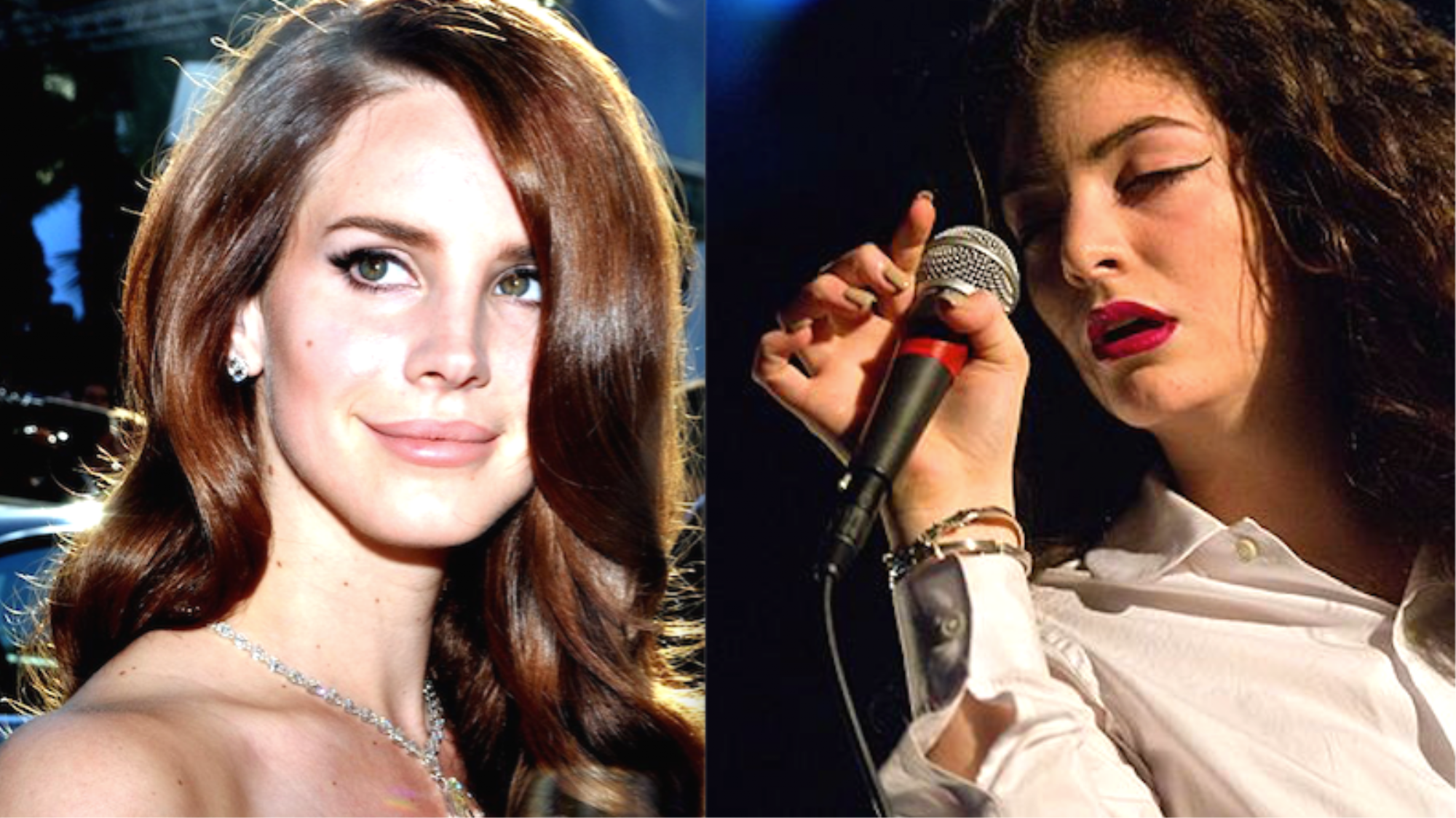
15.  Mariners Apartment Complex – Lana Del Rey
16.  Green Light – Lorde

Image result for lorde lana del rey

It’s important to finish this playlist with some younger, female voices for reasons that will be apparent to anyone who gets to the end of NDTS.

I’ve long been a sucker for the overtness of Del Rey’s façade and the performativeness of her songs, but ‘Mariners Apartment Complex’ appears to mark a more personal turn in her song writing. When she sings, ‘I’m your man’, in the chorus, it’s about self-empowerment and reclaiming gendered language and everything you want to surround your kids – female, male or otherwise - with.

Then there’s Lorde.

Melodrama came out in 2017 and was on high rotate as I wrote NDTS. But I was also in the US in 2013 when ‘Royals’ started to blow up (and Ellie Catton won the Booker Prize) and it was this amazing moment for young Kiwi women and I was struggling to start something new after my novel, The Mannequin Makers, had come out and would struggle for another four years…

So when Lorde kicked off her sophomore album with ‘Green Light’, a perfectly complex dancefloor jam about almost having the licence to just let go, it struck a chord with this thirty-something, who, like Duncan Blake, had “skin the colour of old lace, a penis and a second chance.”


[1] It’s not – it’s a standalone novel – but if it was…

[2] If you get to the end of NDTS, or if you’re like me and you read the acknowledgements page first, you’ll see that I dedicate the book to the memory of Gord Downie, the Canadian musician, writer and humanitarian best known as the frontman of The Tragically Hip. Downie recorded his final solo album, Introduce Yerself, while in the late stage of his battle with brain cancer. It was released 10 days after his death in October 2017, when I was in the midst of writing the first draft of NDTS. I’d been a rabid fan of The Hip and Downie’s solo work for more than a decade, and had shared a brief email exchange with him in the early 2010s which included me sending him my first book, but it felt to personal, too chummy, to have the dedication open the book. So that’s why it’s tucked away in back.

[3] I once flatted with a person who was inconsiderate, untidy and morally bogus (she expected us to lie to her husband when he called), but at the time I thought our most emblematic exchange was when, the one time she actually decided to clean the kitchen, she was blaring an FM station and said to me, “I just love Hootie and the Goldfish, don’t you?”

[4] The formula is pretty simple if you wanna pander to my tastes: dark, brooding music with evocative yet unpindownable lyrics = fantastic music to listen to while writing = dozens of streams.

[5] It was a great show BTW.

[6] Bullet dodged.

[7] One of the cool things about creating multiple filmographies was coming up with movies I wish someone would make. I mean, this craze for basic pop biopics baffles me when there’s so many more interesting stories to be told. Listen to ‘The French Inhaler’ and then Loudon Wainwright III’s ‘Hollywood Hopeful’ and tell me these songs haven’t just conjured up 90 minutes of screen time you’d actually leave the house for.

Wednesday, August 1, 2018

The empty chalice


So it’s the first of August, which means I owe cyberspace two months’ worth of consumption diaries and probably a whole lot more.

Like, what’s going on with my novel? The one I had 12 months full-time to write in Dunedin in 2017 and for which I am leaving money on the table in 2018 to work part-time and finish the f**ker off.

Well, for starters it’s called Nailing Down the Saint. For now at least.

In May I sent the manuscript to one of the US agents who came a’knocking when The Mannequin Makers started getting good reviews in the States. I also sent the manuscript to the publisher here in NZ that’s put out my first two books.

I have comments from the NZ publisher, which translates to a bunch of small tweaks and some more fundamental questions that I may or may not have to action (I’m doing the tweaks first and hoping for a eureka moment that tells me exactly what I should change and how). If I can turn around the next version of the manuscript by mid-September, then it’s on track to come out in July 2019. No contract or anything yet, but that’s the pipeline. My experience of these processes is that the publication date inevitably gets pushed back. And I’m not going to send something off in September if I don’t feel happy with it.

Right now, I’m a little tender about it all. I find it hard going through the edits. I could tell when I got my wife to read the version before the one I sent to the agent and the NZ publisher that she wasn’t that into it. And there’s a lot of “I didn’t get this” or “explain this for the reader” type comments on this latest version that I have to weigh up. Which I might ordinarily find helpful, but at this stage in the process I’m like a baby rat: pink, hairless, vulnerable. Any breeze is chilling. Any light too bright for my still-sealed eyes. I feel attacked. Which is weird. I’ve written before about how necessary and, ultimately, positive the editing process is. Even with this perspective, I feel an uneasy and contradictory mixture of exposed, misunderstood, worthless, frustrated and tired.

Mostly tired.

(Meanwhile at my day job, I’ve spent the last six months trying to get the green light for a multi-million dollar change project. A green light I received in July, about the same time I got my NZ publisher’s comments. However, trifling things like the budget and resourcing are proving harder to nail down than “Approved” might have you believe.)

It doesn’t help that it’s radio silence from the US agent. Of course she hated it. Look at everything that was wrong with it. All those basic errors: “bought” instead of “brought”, “disinterested” instead of “uninterested”. The slow patch in the middle. The too-fast, too-oblique patch towards the end (okay, the whole last forty pages).

At times like this I feel like I should never write a novel again. The short story is so much more forgiving. My writing muscles are fast twitch, meant for sprints not a marathon. When I look at my manuscript, all I see is text. Words placed for manipulative purposes. No matter how much I want it to be a story, to have narrative, to be an immersive experience for the reader, it’s the opposite.

The Chalice
The image in my head is Neil Dawson’s sculpture, ‘The Chalice’, which stands in Cathedral Square in Christchurch. The words are the structure of the chalice, starting solidly enough at the base, but getting more and more sparse as it rises. And at its centre? Nothing. The further from the base you get, the clearer the nothingness is.

Writing a novel is a confidence trick twice over. First, you need to trick yourself, then you need to trick your reader. Right now, I’m falling at the first hurdle (albeit with a 110,000 word manuscript to wring my hands over).

I keep saying things like “right now” and “at times like this” because I know it’s just a mood. I’m at a low ebb. It’ll get better. But the peril is real. This book might suck. The tweaks to make the intended meanings more clear might just bring out the suckfulness. The wordiness. The nothingness.

A lot of this stems from how and why I attack the novel form. I do so as a short story writer with oodles more space. I want a patterned, complicated web of meaning. I don’t ever think in terms of “theme” while plotting or writing, but the best term I’ve come up with for my novelistic approach is “thematic maximilism”.

I begin to build a novel around two unlikely elements. With The Mannequin Makers it was shipwrecks and department store mannequins. With NDTS, it’s Hollywood and a levitating saint. I then build a bridge between these two elements, which inevitably centres on characters.  For TMM the most obvious bridge is The Carpenter/Gabriel Doig, who goes from being a figurehead carver to a mannequin maker, via a shipwreck and extended period as a subantarctic castaway. For this current novel, it’s my protagonist, who is a floundering Kiwi filmmaker in Hollywood, given a lifeline in the form of a location scouting gig for film about the life of San Giuseppe da Copertino.

Once I have the two poles and the character-based bridge, I go about filling in all the blanks that are necessary to translate my daydreaming into something that might be meaningful and enjoyable for another human being. So characters need other characters to interact with, they need jobs and motivations, passions and secrets, they need to have a look and a way of talking. When searching around for one of these things, let’s say it’s a job, I wait until I hit something that chimed with, or off, an element that’s already in the novel.

In TMM, when I was looking for what Eugen Kemp would be after he left New Zealand, and I came up with a surf lifesaver, that clicked because of the link with physical culture and the teachings of Eugen Sandow, and also the idea that he would spend the rest of his life trying to save people after not being particularly save-y (and in one case, being the exact opposite) in his teens. With surf lifesaving in place, the final section began to echo the first and second, while also pushing the interest in physical perfection (which might get called a “theme”) somewhere a little different.

In this next novel, there are clusters of association around scepticism and belief (Catholic saints, the feats of mystics, a modern cult; but also: Hollywood visual effects). The process of writing the novel was one of challenging my innate scepticism and the general laziness of my generation when it comes to anything beyond the superficial and instantly gratifying. The surface of the novel is still papered over with scepticism and contemporary references (the playlists the characters make for their roadtrip, the machinations involved with making a Hollywood movie), but underneath it there should be something more timeless, more confronting. I want people to see both the surface and the subterranean. I don’t want the chalice to be empty. But I don’t want to be too obvious about it. And that’s where I’m mired at the moment: an endless string of decisions about what I spell out, what I foreground a smidgeon more, and what I let lie beneath.

All the while having more instantly gratifying and superficial pleasures like playing Fortnite or watching Netflix instead of the mental gymnastics required to decide what are my minimum requirements and what are my readers’.

At the moment, I’m questioning if my imagined reader really exists. Like, there are people who’d get the references to Toad the Wet Sprocket and Wolfenstein, but do they read for pleasure anymore? Do they?

Should I spell things out for a more likely readership, and in the process alienate the one or two readers who come closest to what I’d be like if I was to pick up this book with no prior knowledge?

I don’t want to write something for Boomers or even Gen X. If they get it, great. But I wanted to make a book for cuspers like me, with one foot in the digital but one back in the analogue. People who vaguely remember having a rotary telephone, distinctly recall the first time they used the internet (that dial-up modem screech!) and spend most of their waking life trying to be good people on an ever-shifting identity playing field.

I’ve tried to write a novel about (inter alia) being a middle class, cis, heterosexual, pakeha male; one that is honest about the blind spots such characters can possess and acknowledges the bar must be raised for what passes as good enough when white dudes grab the mic; that suggests passing the mic down the row without adding your self-aggrandising reckons is acceptable without having to make it heroic (aside: how fucking hard is it to make your protagonist do the right thing in a traditional Western narrative from without it having to be heroic?)…

But at the same time I wanted the book to challenge where we draw the line about what’s important and what should be re-evaluated. If levitation is possible for some people (I know this is a big IF, but if it helps to suspend your disbelief try and think of this as a metonymy for anything the conventional materialist worldview dismisses as paranormal) does that mean there’s a kind of psychokinetic fluidity? How would you respond when asked to consider this possibility in the context of a traditional quest narrative?

Maybe I should just give up trying to order this spider’s web of words and meaning and just pass the mic down the row. Because Fortnite and Netflix and spending time with my kids and taming my garden and delivering a kickass change programme for the way we measure the quality of learning environments at schools is a pretty full and potentially fulfilling life… if I draw the line short of where I’ve gotten to in my head and step back over it.

Maybe I should just write about the music, books, film & TV I’ve consumed these past two months and pretend everything is hunky dory (when it’s more Aladdin Sane).

Or maybe I should give it a day, let my baby rat eyes open, my translucent skin toughen, and get back to nailing down this novel that keeps threatening to float away.