Thursday, June 7, 2012

Bloody good / Holy morality Batman / Despondency

There will be blood


I Got His Blood on Me: Frontier Stories

Tonight is the launch of Lawrence Patchett's short story collection, I got his blood on me. (6pm at Unity Books, Wellington, if you wanted to pop along.)

I've just finished the book: it's bloody, ballsy, smart, experimental, reassured. I will post an interview with Lawrence (like these ones: Tina Makereti, Pip Adam, Sue Orr, Anna Taylor, Breton Dukes) in due course.

Until then, here's a listening suggestion for when you read the book:


Morality Play

I don't like to use flash photography on wildlife. I don't know if there's any evidence that it does them any harm (probably depends on the creature), but it seems wrong.

Sometimes, however, I have my camera on the wrong setting and I'll flash an unsuspecting bird. This happened the other day at Karori sanctuary. My camera was set to 'macro' (which is next to 'action', my default bird-snapping setting since they move so frequently and so swiftly) and it flashed, though I didn't notice the first time, so I took another.


When I looked at the second photo, I noticed how great the colours were and how crisp the robin looked, then I twigged.

Sadly the non-flash photos didn't turn out at all. To further muddy my moral waters, the robin didn't seem blinded, offended or put-off by the flashes, even coming closer to me. I know it was just after the grubs my footsteps were rustling up, but it seemed more than willing to put up with the paparazzi treatment to get a feed.

I like taking photos of birds because a) I like being in the bush (even when it's a gated sanctuary) a) I like observing birds c) I like the challenge of capturing birds on film jpeg, which is a mostly down to good luck rather than technique. But I don't want the drive to take better photos to crowd out the birds and the bush.

Even if the bird doesn't care about the flash, I do. I think.


Out there / Oh dear


My coterie of trusted readers currently have 70,000 words of THE NOVEL to gnash, pooh-pooh and dismantle as they please. All comments and criticism will be received with open ears on 24 June.

I still have several chapters to write to finish the beast off. (As you might surmise, I'm a bit distracted today, blogging about nothing-much and all). But it's getting there, despite this latest wade through the slough of despond. Sample thoughts: It just feels like a pile of words. People will think it's for children. I can't write for tuppence. Why is Part Three so fricken loooong? Two years for this? Etc.

But, as we sang at end of year assemblies in high school: Nihil bone sine labore.

Saturday, June 2, 2012

Some thoughts on The Marriage Plot

Billboard via Village Voice
Plots Familiar

The Marriage PlotI recently consumed the audiobook version of The Marriage Plot by Jeffrey Eugenides. I found myself popping my iPod on while doing the dishes or watering the garden, not just during my workday commute, which is always a good sign for my level of engagement with a book.

For the first time in a while, the American Contemporary Social Realist Novel felt like a genre, and I don’t mean that disparagingly: it felt snug and comforting. Here was the entire spectrum of middle class white college kids in the early eighties (so not much of a spectrum, really) talking about Victorian novelists and literary theory and religion (at other times, the narrator quotes long passages from books on these topics).

The Marriage Plot is also a campus novel and, funnily enough, a marriage plot novel – but despite all the familiarity, it is compelling and absorbing and somehow fresh.

Will this be the Eugenides book  people will be talking about in twenty-five years? Hmm, probably not. Unless Sofia Coppola turns into a film (I don’t think it’d work to well in that medium, so even that mightn't work).


The Possibility That Dare Not Speaks Its Name

Via Guardian, photo: Mel Evans/AP
At the end of the audiobook there’s a brief interview with Eugenides, which I think is a great idea and should happen more often. The interviewer asks Eugenides if he could ever see himself returning to these characters as Updike did with his Rabbit books.

Until this point (I’d only just finished the novel, so it’s not like I’d had much time to mull it over) I hadn’t considered the fact the ending was a good set up for a sequel (however icky sequels might be). The ending felt complete and satisfying in its way (partly because it wasn’t satisfying in a predicable, romantic sense – without wanting to give too much away) but it could totally be the first book in a series.

Thankfully, The Marriage Plot doesn’t feel like the start of a franchise – it’s too myopic, too whole, to entertain such thoughts. But, yeah, I wouldn’t be surprised if Eugenides returns to these characters in thirty years (at which point the story would be set in 2012, so the characters will probably spend all their time reading blogs and tweeting…)


The Arbitrary Reader


Because I was listening to The Marriage Plot over the same stretch of days that I was reading Emily Perkins’ The Forrests (as a paper book), it’s only natural that I began to draw comparisons between the two books. Add to this the fact that Perkins and Eugenides appeared together at the Auckland Writers Festival for a session on ‘The Future of the Novel’, and it seems irresistible to compare and contrast.

The ForrestsIn a few key ways, you’d be hard pressed to find two more different takes on the contemporary novel. The Forrests covers the Dorothy Forrest’s life from childhood to very old age, ranging from the 1970s to some time in the near future. The Marriage Plot mostly takes place in 1982, moving back and forward a little to tell the main characters' back stories, but it’s range is hyper-limited compared to Perkins’ novel. Also, while time marches relentlessly on in The Forrests, single events are returned to in different The Marriage Plot's chapters to show things from a different character’s perspective. This might be less like how we experience our own lives, but it's something we're used to in books and can't help but make a reader feel a tad empowered.

Romance and depression (specifically manic depression) are brought to the fore in Eugenides’ novel, not just through the action presented and the characters’ dialogue, but also via excerpts from other works. The Forrests features more marriages and just as many unrequited loves as The Marriage Plot, but that all takes place off stage, just as the depression that characters descend in and out of is hinted at through their actions rather than a discussion of their brain chemistry.

And while reviewers have harkened back to Virginia Woolf with reference to The Forrests, The Marriage Plot is just as retro, though its forebears are, unsurprisingly, the marriage novels of Austen, Tolstoy and Henry James. It is no surprise, then, that the novels are so different, and why the question of THE FUTURE OF THE NOVEL is a kinda strange thing for these writers to talk about.


But which did you prefer?

Okay, pushy interlocutor, I’ll bite. I liked The Marriage Plot more, though I think it is the less ambitious book. This is very strange for me, as I tend to be very forgiving of ambitious books. (In my lighter moods I forgive my own terrible prose and cardboard characters because of the ambition that led me down that particular rabbit hole.)

I think it comes down to a couple of basic things: structure and voice.

The Marriage Plot deploys the classic love triange plot and matches it with a tertiary structure where each character gets serious page-time as the perspective character. It’s not perfect structurally. There are a few slips in perspective, when we are not looking over the shoulder of any of our three protagonists, eg the phone call between Leonard and Madeleine’s mothers. And the triangle construction fails to achieve true balance: there’s a lot of Maddy and Leonard in the same scene (from either M or L’s perspective, and some events from both), while Mitchell spends a lot of time alone, and therefore gets less screen time, even if he gets the same amount of pages from his perspective… (actually, we probably get more from his than from Leonard’s).

And then there’s voice. Eugenides’ narrator was just more engaging that Perkins’. He (I think of the narrator as a he, probably because a dude wrote the book and a dude read the audiobook) has done the hard work of figuring out what's important and is there to drag you along through the maze. Perkins' narrator is much more hands off. You have to figure why things are important, where we are, sometimes who we're even following at the time -- clearly this is a more ambitious decision, and it has it's own rewards. But for pure reading pleasure, gimme the Eugenides.

(I was pretty convinced about my position before I tried to put it into words. Now, I suspect my views will get blurrier with time. I might even disown what I've said above. So be it.)
Wednesday, May 30, 2012

Spotify: I'm sold (on the free version)

Days of the New

Back in November 2010 I wrote a column about the theory that most people stop buying music by new artists by the age of 26 (at the time I was 27; cue chin-on-hand, watery-eyed reminiscence about fleeting youth). It certainly rang true for me:
When I was 25 I was still seeking out new-to-me artists and buying their music. That year I got into bands like Beirut, The National, Shearwater, Elbow and Wintersleep. I know because I tracked my listening habits on the website Last.fm. When I went back to Last.fm today I discovered I hadn't logged in since October 2009, which says something in itself about my waning status as a music aficionado.
I vowed to try a bit harder and got lots of recommendations from readers about what to listen to. I wrote a follow-up a few months later about my discoveries (not online unfortunately), but it took time and energy to figure out what I should be listening to and get a hold of it in ways that balanced my conscience and my finances.

About twelve months ago I got back in the habit of borrowing CDs from the Wellington City Library. For $1 you can listen to an album for a week – enough time to know if it’s worth investing more in the artist in question. And searching through the racks for new discoveries / re-discoveries will always feel like the ‘right way’ to discover music after all those hours spent in CD stores in my youth.

And then, eight days ago, Spotify launched in New Zealand. I signed up as soon as I heard the news and I haven’t looked back.

What is Spotify?

It’s a music streaming service that offers over 16 million tracks for free, if you’re willing to put up with a bit of advertising (one or two audio spots every few songs and some banner ads). You can chose to pay $7.49/month to go without the ads, or $12.99/month for the Premium service which offers a higher bitrate for audiophiles and the ability to listen on a variety of portable devices (more on this later). 

You automatically get 48 hours as Premium user when you sign up, then get 14 days to sign up for a further 30 days of free Premium, which is nice. I've put off using my free 30 days of Premium so I can get a sense of what the free version is like. At this stage the ads aren’t too annoying. They’re mostly about different features of Spotify and related apps, so it’s a bit like a drop-fed user manual.

The glory that is Spotify in anecdote form

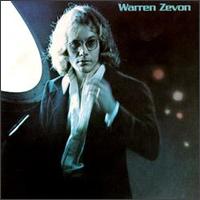
Earlier this month, in the dark ages P.S. (Pre-Spotify), I was possessed with the desire to get the Collector’s Edition of Warren Zevon’s 1976 self-titled album, which featured the original album remastered with a second disc of alternate takes and demos. There was no chance of me finding a physical CD of this album in Wellington, and my desire was so strong I couldn’t wait for a copy to be shipped to me. So I scanned the internet for an illegal torrent to download an illegal pirated version of the Collector’s Edition illegally. Such was my craving.

But I could not find anywhere to illegally download this album for free. It looked like I could subscribe to some illegal file sharing sites and illegally download this one album and presumably get hooked on such illegality while they bought Auckland mansions with my filthy lucre... but if I was going to spend $$, it might as well go to the rightful copyright holder.

In short: I spent my allotted Aimless Internet Trawling hours that day trying to listen to the 1974 demo version of ‘Carmelita’ without success.

Then Spotify came along. The first thing I typed in was ‘Warren Zevon’ and within six seconds I was listening to versions of some of the best Songs Noir ever written. 

No buffering. No blips or glitches. 

I was home.


The goods

Spotify generates income for copyright holders through advertising revenue and subscription fees. The rate per play is miniscule, but these things add up. It is a workable business model and a legitimate way for people with an internet connection to listen to music and reward the artists.

How is this different from internet radio? How is it this same?!? It’s more like your iTunes library just underwent the big bang. Those 10,000 tracks you had? Now you have 1,600% more. You call the shots. It’s as easy to manage as iTunes and it’s simple to share playlists with friends (or go incognito if you don’t want people to know about your penchant for Bette Milder).

The urge to pirate, or support piracy, is now zero. (Okay, so not every track every recorded is available, but dude, do you have to be that guy?).

Listening at 90kbps provides decent quality for my purposes (listening while I write about a time before the gramophone was invented) and has very little impact on data usage that I can see (as opposed to watching NBA TV – I’ve gotten a bit spoilt and can’t handle the 400kbps feeds anymore... ).

I’ve spent the last week filling in some gaps in my music listening: artists where I’ve heard one or two of their albums and always meant to delve deeper (Los Lobos, Alejandro Escovedo), new albums from bands I quite liked at one stage but sort of stopped paying attention to (Nada Surf, Willy Mason, Harvey Danger), newish artists I’ve 'heard of' but not really 'heard' (Kimbra, Boy & Bear) and artists I’ve never listened to but were recommended for me by an app (The Long Winters, Fancey).

The outcome: it’s the most pumped I’ve felt above music since I was 25.

The bad

Okay, so the ads on the free version can get a bit repetitive if you’re listening solidly for the whole day (as I do on my ‘writing days’), but it’s not as bad as the radio.

And it’s a bit difficult to share playlists with friends when hardly anyone I know has signed up yet (I’m talking to you, Dan!).

No, the only thing so far that’s wrong with Spotify is that listening on an iPad is counted as listening on a mobile device and therefore requires Premium membership at $12.99 a month. Yes, a tablet is a mobile device, but I’m a home body. I like to play music on my iPad when I’m doing the dishes or reading a book in the lounge. I don’t have a lot of songs on my iPad because of its limited memory, so I hardly ever have the album I want to listen to at that exact moment. Spotify would solve that (if I was a Premium member).

I can listen to ‘French Inhaler [Solo Piano Version]’ on my desktop in my office. But if I want to listen to the same song while I fold the washing ten metres away I need to drag my PC down the hall. That seems stoopid. Surely there’s some way to set up a local Spotify network and, so long as I’m in my own home, I can get the adsy, free version of Spotify on my iPad? Pretty please? I do listen to your ads, honest. I promise I’ll buy a coke tomorrow and I can’t wait for the London Olympics.

The Future

More playlist posts. Possibly with Spotify links. Let's just see how the one above works...

Wednesday, May 23, 2012

Things Left Unsaid - A post about The Forrests by Emily Perkins


The Forrests
On Monday the NZ Listener posted a book club’s discussion of Emily Perkins’ new novel The Forrests. To the surprise of many, a number of negative responses to the book were expressed, running counter to the hype and the lion’s share of reviewers to date.

What follows is a rather long post about the book and responses to it, including my own.

Tuesday, May 15, 2012

(Inter)National Flash Fiction Day - May 16


Apparently May 16 is National Flash Fiction Day in the UK. (This link has some tips for how to write flash fiction, but all you need to know is: edit ruthlessly.)

For some reason, New Zealand's National Flash Fiction Day is 22 June.
I haven't written any flash fiction for a while, but here are thirty 100 word stories I wrote in 2008.

And here is a single story made up of thirty 100 word sub-stories. (An amended version of this may appear in the endpapers of THE NOVEL...)

This concludes today's flash post.

Thursday, May 10, 2012

Recent reading / taste / neglected reading

Read to me truly

A Place of My Own: The Architecture of DaydreamsI recently listened to two non-fiction audiobooks, both of which were read by their authors: The Pig That Wants to Be Eaten: 100 Experiments for the Armchair Philosopher by Julian Baggini and A Place of My Own: The Architecture of Daydreams by Michael Pollan.

The Pig That Wants to be EatenOf the two, I enjoyed Pollan’s the most by far. It’s about his experience building his own ‘writing house’ – perhaps it’s no wonder it appealed since I’m perpetually struggling to claim space to write (and once secured, perfect that space), and have started waking up to architecture in the last six months or so.

Baggini’s book is literally 100 thought experiments, like, if that pig really wanted to be eaten, would you renounce your vegetarianism? Some are a bit meatier than that (excuse the pun), but I found the discussion that followed each scenario to be too light to be worthwhile.

A question of taste

Both Pollan and Baggini’s book got me thinking a lot about taste. In one of Baggini’s thought experiments, a dude decides to only make rational decisions but when it comes time to go to the diary, he finds himself equidistant from two stores stocking identical goods. The only way he can think to choose between the two stores is to toss a coin, but then he thinks that’d be irrational, so he ends up starving to death (or something… I’m paraphrasing heavily). Baggini comments that there world doesn’t separate evenly into logical and illogical, that there’s a raft of things that are outside of logic, and this is where taste comes in.

Personal example: I love feijoas, like apples, like oranges, dislike persimmon. If offered the choice of two fruit, the choice will be easy for me unless I'm offered apples and oranges, in which case it'll come down to how I'm feeling at the time (and if I can be bothered peeling the orange). Logic doesn’t really come into it (expect the question of peeling the orange, perhaps). My tastes are just a set of coin tosses that took place behind the scenes which predetermine my behaviour when allowed to act outside of logic.

Arlington One
The question of taste, of course, is big in architecture. My next column in the Dominion Post (it'll appear Sat 19 May // UPDATE: Here it is) is about two blocks of council flats here in Wellington and their architectural flourishes: Do these spaces have a designed purpose? What are they used for now? How important are they in the scheme of things? When discussing the porthole windows of the Pukehinau Flats, or the periscopey lift tower of the Arlington Apartments, it’s really a question of taste: Do they appeal to your eye? Do you value character in public housing? And if so, at what cost?

When it comes to fiction, the temptation is to focus in on the ‘big mistakes’; these both shape the plot and go some way to shaping the characters. But it’s dangerous to think about ‘big mistakes’ in terms of logic. With hindsight, and within the confines of a narrative structure, it often seems like the character made an error of judgment which led to the ‘wah-wawm’ moment, that they acted illogically and therefore deserve their comeuppance. On the contrary, I think most lives are shaped by tastes and preferences, these little apple-beats-persimmon, feijoa-beats-apple binaries that are constantly shifting (today orange beats apple because I feel like some vitamin C), and logic doesn’t come into it. Think about how you wound up with your current (or most recent) partner. If there was a ‘Do I or don’t I?’ moment, it likely came after you already did at least once.

The best short fiction knows this. It doesn’t deal in logic or blame, but looks at where we wind up when our tastes are given the wheel. Which is why so much feels intractable within a short story.

And novels? I’m not sure. I know there’s a ‘big mistake’ in THE NOVEL… perhaps it’s my big mistake, a failure of my logic, the flaw at the heart of my latest attempt at the longer form?

Or perhaps it’s all a question of taste.


'In the end, a playlist exists beyond logic'

'Pablo Picasso' - Modern Lovers
'Outside Chance' - The Turtles
'I've got that feeling' - The Kinks
'Growin' Up' - Bruce Springsteen
'Imagination (is a powerful deceiver)' - Elvis (Costello)
'Everyday is like Sunday' - Morissey
'Silver Future' - Monster Magnet
'Kingdom Come' - Tom Verlaine
'My Country - tUnE-yArDs
'Pascal's Submarine' - Gord Downie


And now…


State of WonderMy current audiobook is Ann Patchett’s State of Wonder, read by Hope Davis. Sadly, Ms Davis struggles  with the Australian accent and the first third of the novel features two Australian characters. This small quibble aside, I’m enjoying the book. I am reminded of something Patchett said at the Melbourne Writers Festival last year about the part before Marina Singh gets into the Amazon being much longer until a friend/editor convinced her to Cut Cut Cut. I’ve notice parts where it feels as if a chunk has been excised, but I’m not complaining. I might even advocate for further streamlining (once I’ve finished the whole thing and know what’s really important).
The Forrests
I’m also reading a paper book at the moment that isn’t research related. It’s Emily Perkin’s The Forrests. I’m about 150 pages in, and looking forward to the coverage the book receives as this month's selection for the Listener’s Book Club.


A check against targets

In my 2011 end of year reading summary, I noted the following goals for my reading in 2012:

  • "Read 12 poetry collections (one a month): hopefully there's a new Geoff Cochrane collection coming out around Writers and Readers Week like in '09!!" (Running total: zero… Ay carumba. BUT Geoff Cochrane has a new collection of poetry coming out in July. It will be called (cracks knuckles and furrows brow in concentration) The Bengal Engine’s Mango Afterglow… Can’t wait.)
  • "Listen to 12 audiobooks, including at least four non-fiction books." (Running total: 12 already if I count State of Wonder; non-fiction: 4... TICK! Makes me feel a bit better about my poetry fail.)
  • "Read at least twenty New Zealand books." (Running total: 7, includes four non-fiction books that are research for THE NOVEL)
  • "Read at least six Australian books of fiction." (Running total: Two - Forecast: Turbulence by Janet Turner Hospital and Inheritance by Amanda Curtin... I didn't blog about them at the time as I was about to appear in a panel with JTH and AC in Perth... not that I didn't enjoy both collections, just throught it'd be weird)
  • "Read at least six books I already own" (Running total: zero)

Conclusion: A third of the way through 2012 and I've already achieved one goal (and its sub-goal), am on target for two more, but I'm yet to get outta the gate for the remaining two. 

Monday, May 7, 2012

Edwin Fox Maritime Museum, a rave.


This past weekend M. and I attended a wedding in Blenheim, which involved my first trip south on the ferry since 2000. Both the crossing to Picton on Friday and the return voyage on Sunday were incredibly smooth, but both took place under the cover of darkness, which was a great shame. I’m sure the sounds looked amazing.

The highlight of our weekend in Marlborough was a visit to the Edwin Fox Maritime Museum in Picton.

As regular visitors to This Fluid Thrill will know, my current work in progress, aka THE NOVEL, has nautical and historical elements, so the chance to see the world’s ninth oldest ship seemed like a good way to kill some time before catching a ride to Blenheim.

But the Edwin Fox, built 1853 in Calcutta, is more than just the world’s ninth oldest ship as this placard from the outside of the museum announces:

The Edwin Fox: the oldest merchant ship in the world, the last surviving East Indiaman, the oldest ship that brought immigrants to NZ or convicts to Australia and the best $10 you can spend in Picton.
The museum has a decent display upstairs that covers the ship’s construction and various working lives as a transporter of cargo/convicts/immigrants, as a hulk used by a freezing works, its near ruin and its subsequent preservation.

But the real star of the show is the Edwin Fox herself. You can walk on a section of the ‘tween decks (which is a bit misleading as there’s little of the main deck left, so it feels like you’re above decks), inside the cargo hold (the inside of the hull from bow to stern) and around the entire ship. As it is in dry dock, you get to see the ship in a way that is impossible if it is in water.
The 'tween decks, looking aft
Some ship geek inspecting the cargo hold.
From the keel of the Edwin Fox
Walking on and around the Edwin Fox brought home the scale of such ships – both their massive size and weight, the amount of teak, pig iron and muntz, and how small it must have seemed when making a hundred day passage from Europe to New Zealand as an immigrant.

Even M., who has very little interest in this sort of thing, enjoyed the experience immensely.

On a personal note, my one disappointment was that the Edwin Fox, despite being the most expensive ship built in Calcutta at that point (or so one of the displays claimed), only had a billet head rather than a full-on figurehead. But that’s just coz I have a thing for figureheads. To the credit of the museum and the Preservation Society, the original carved billet head is on display in the museum.

Edwin Fox Billet Head
I should also say I am a great fan of the fact little has been done to restore the ship. This is not to say a great amount of time, money and effort has gone into its preservation, and that a great deal more will be required to continue to preserve her, but the experience is so much the greater to observe how time and the elements have treated this vessel.

To refurbish her would surely be the end for the original ship and beginning of a full-scale replica (you can see where I might fall on the question of the ship of Theseus, can’t you?). Give me relics or give me death!

Stanchion eroded by the tides while the Edwin Fox was grounded.
A side of the Edwin Fox showing remnants of copper plating and the ship's teak construction with both metal and wooden trenails.
The Edwin Fox Maritime Museum is well worth the $10 entry fee and a great way to spend a couple of hours at the beginning or end of your South Island getaway. It is a pearler of a regional museum offering something of regional and international importance, without any unnecessary buff and bluster.

Sunday, May 6, 2012

The Covers of David Bowie, OR: Taste and how to recognise it

I thought I could do a post that would prove David Bowie had good taste (after my musings about taste last week) by listing a bunch of his best covers. My thinking was: it's tricky to look at taste based on an artists own work because they are so often reacting against what they've done previously.

The difference between Madonna and Cyndi Lauper is that Madonna had the kind of hyper-selfconsciousness you need to become a pop icon across four decades. She made the right choices, for the most part, about what to chameleon into next. She showed good taste in which movements and which artists she aligned and re-aligned herself with (for the most part).

But her covers? According to The Covers Project, Madonna has only released six cover songs in her long career. You can probably discount 'Don't Cry For Me Argentina' as that was part of the Evita package (a discussion of her film career would also put pay to the idea she has good taste), and 'Santa Baby' (Christmas songs don't count - ninety-seven of UK artists breath a sigh of relief). And what do you have left? Little Willie Johnson's 'Fever' (which owes more to Peggy Lee's feminised cover in 1958), Rose Royce's 'Love Don't Live Here Any More', Marvin Gaye's 'I Want You' and her turrible cover of Don McLean's fiercely over-rated 'American Pie'.

Verdict: forgettable, or worse, covers of okay songs (you'll notice I've done you the courtesy of not linking to any of the songs... you're welcome). It makes me wonder what's on Madonna's iPod.

But David Bowie... he's done some fantastic covers. Again, you can refer to The Covers Project's Bowie page for all his covers (and covers of all his songs).

Here are my top five:


Let's Spend The Night Together (Rolling Stones)


I was tempted to say Rebel Rebel here. While technically not a cover, it is Bowie playing Jagger over a Keith Richards Riff For The Ages. But 'Let's Spend The Night Together' shows both good song selection and the chutzpah to mix it up a little: those Hawkwind spacerock squeals in the intro, the upped funk quotient, the clunky piano, that disintegration outro and slight return... yeah, that's the stuff.


Sorrow (The McCoys)


The best cover in Bowie's 1973 cover album Pin Ups (notable mentions: the Easybeat's 'Friday on my Mind', the Pretty Things' 'Don't Bring Me Down') is the perfect middle ground between the McCoy's sleepy original and the Mersey's too poppy 1966 version. It's like some artists don't actually know what they're singing about. Bowie sure does (here) and his became the definitive version.


Knock on Wood (Eddie Floyd)


Eddie Floyd's version is cool. Bowie wants to ride on the coattails of Floyd's swag, but goes one better by putting the pedal down and racing though one of the best fusions of funk and rock on record. The sax is still there, but it's not the star. There's too much else going on: the guitar that comes and goes, the tinkly piano during the second verse. (If there is a star, it's the MC5-style shout-don't-sing backing vocals.)

China Girl (Iggy Pop)


Any mention of Bowie and Iggy Pop should include the words Berlin and drugs, but let's not. Bowie was one of the first to recognise Iggy's talents beyond the Stooges sludgey power punk, and went on to cover six songs first recorded by Pop. I chose 'China Girl' (co-written by Pop and Bowie), because I think it is more of an Iggy song, that dirty back alley milieu, and Bowie cleaning up Iggy's version and turning it into a more coherent pop song shouldn't work. But it does. After his years as the Thin White Duke, he knew that his voice alone was creepy enough to unsettle a diligent listener.


Helden (German version of Bowie's 'Heroes')


Technically not a cover version, but it shows a couple of things. One, Bowie and Eno were influenced by Neu's 1975 track 'Hero', and recording a German version of their homage nicely completes the circle. Two, good timing to talk about heroism with the whole East German - West German thing going on. Three, I defy anyone not to sing along to this version, no knowledge of German required.


The Inevitable But

Okay, so Bowie has done some great covers, reviving decent songs that might have slipped from the great Western songbook without him, repping cool artists, and putting his own spin on things.

But not every Bowie cover is a gem. In fact, when I really started to dig, the hit rate seemed to be entirely random.

One thing big name artists should avoid where possible is covering other big name artists. Does David Bowie really need to cover the Beatles? No. And yet we have a forgettable version of 'Across the Universe'. Does the world need another cover of 'Waterloo Sunset'? No, at least not David Bowie's poor excuse for a cover. But these are nothing compared to the crime against the aural world that is his version of the Beach Boy's 'God Only Knows'. Ack! Those hokey Tim Curry-esque vocals and broke-baroque Jimmy Webb-esque string arrangement! Double ack!

Then there are cool, lesser known songs/artists that are due a little extra exposure, but the cover never comes close to the original. For example, Bowie's cover of Tom Verlaine's 'Kingdom Come', where he unnecessarily clutters the chorus and generally comes across as whiny and hammed up.

So Bowie is not the God of Covers. Perhaps just the Patron Saint. He's not ashamed of showing people what's on his record player / iPod through the medium of the cover version. The problem is he isn't always able to incorporate his outsized Bowieness without obliterating what was cool about the song in the first place.

Without referring to his own songs and just looking at his covers, I think you'd conclude that David Bowie has good, but not impeccable, taste.